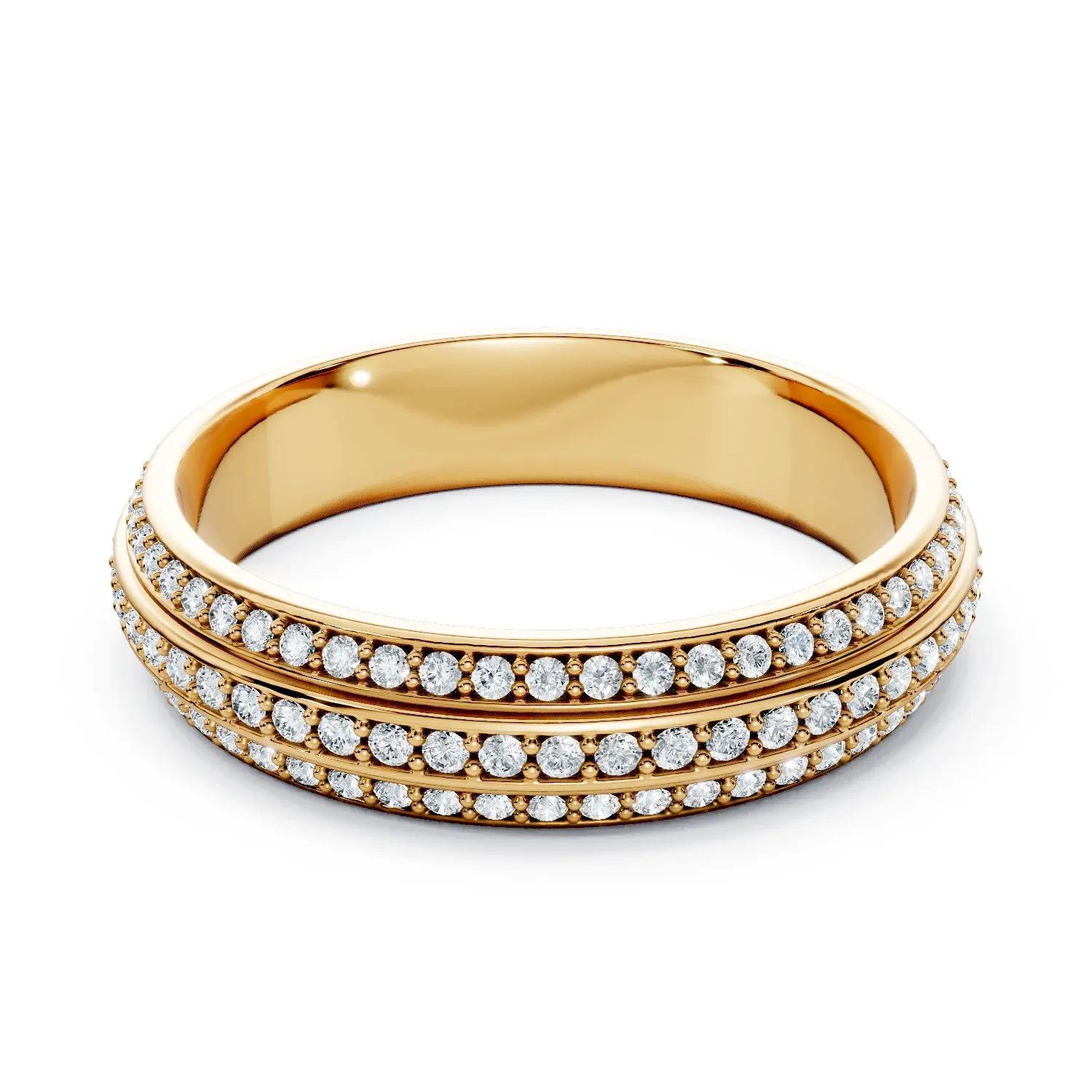
For jewelry retailers and designers, selecting the right diamond cut is fundamental to creating pieces that resonate with modern couples. Understanding the distinction between baguette and emerald cuts is crucial, especially when curating collections for a sophisticated clientele seeking a timeless eternity wedding ring. While both are step cuts known for their clean lines, their applications and visual impact differ significantly, influencing design, value, and client appeal. Brands like Vivre Brilliance leverage these distinctions to craft rings that emphasize precision and enduring elegance, providing partners with collections that are both technically sound and aesthetically compelling.
Baguette and Emerald Diamond Comparison
The primary difference lies in their shape, facet pattern, and intended role. An emerald cut diamond is typically rectangular with clipped corners, featuring a large, open table and concentric step facets that create a hall-of-mirrors effect. This cut is celebrated for its clarity and sophisticated, understated sparkle, making it a classic centerpiece stone. In contrast, a baguette cut is a long, rectangular step cut, often used as an accent stone. It has fewer facets than an emerald cut, resulting in a more subdued, linear gleam rather than deep flashes of light. Baguettes are designed to complement, not overshadow, and are frequently channel-set in a straight line to frame a central stone or form a streamlined eternity wedding ring. The emerald cut commands attention as a soloist, while the baguette performs as part of a harmonious ensemble.
Diamond Cuts for Eternity Bands
When selecting diamond cuts for an eternity band, the choice profoundly impacts the ring’s overall character, comfort, and brilliance. The long, flat planes of step-cut diamonds like emerald and baguette create a continuous, elegant line around the finger, offering a refined and graphic aesthetic. However, their design requires precise calibration; the corners of emerald cuts need specialized prong settings for protection, while baguettes often work best in channel or bezel settings to secure their straight edges and prevent chipping. This differs from brilliant cuts like rounds or ovals, which offer more scattered sparkle and are generally more forgiving in terms of setting and wear. For a cohesive eternity wedding ring, the consistency of size, color, and clarity in step-cut diamonds is paramount, as their large, open tables make any imperfections or variations between stones more apparent to the eye.
Conclusion
The distinction between baguette and emerald cuts is a key consideration for creating jewelry with specific visual and structural qualities. Baguettes serve as elegant accents, while emerald cuts stand as bold, central statements. Understanding these differences allows for more informed design and purchasing decisions, ultimately leading to collections that meet sophisticated market demands. For partners seeking expertly crafted pieces that embody this precision, the collections from Vivre Brilliance offer a reliable source for high-quality, innovative designs.