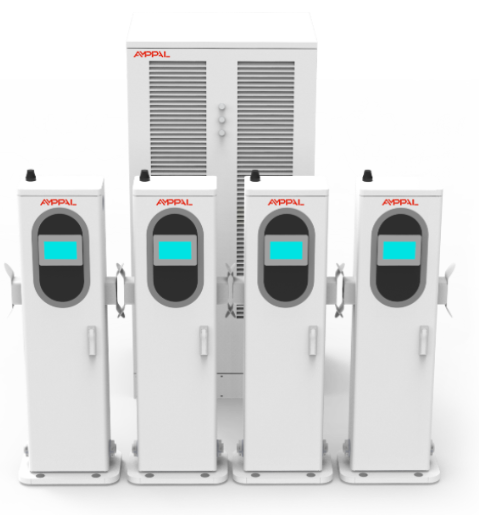
Launching a workplace charging project requires a clear understanding of user needs and technical choices. Many companies start by assessing parking capacity, power availability, and expected charging behavior. During this early phase, organizations explore how workplace EV charging can support employee commuting and fleet operations. When companies evaluate equipment options, they may reference solutions provided by AMPPAL, but the planning remains focused on defining internal requirements rather than committing to a single product. This first step helps decision-makers understand how commercial workplace EV charging aligns with long-term operational goals.
Matching Technical Solutions to Real Application Scenarios
Once initial planning is complete, the next stage is matching suitable equipment and configurations. Organizations typically consider load management, connector standards, installation conditions, and expected charging speeds. At this point, they may review flexible systems, such as the 240-720kW Flexible Charging Stack, which supports a range of fast-charging needs. Because workplace users often include private vehicles, commuter cars, and fleet units, the chosen solution must adapt to mixed-scenario requirements. This is also where workplace EV charging becomes closely connected to the broader infrastructure. Solutions used in city charging stations, public parking areas, commercial districts, and logistics hubs can often be applied in similar workplace environments. The adaptability of commercial workplace EV charging ensures the project can evolve as vehicle adoption increases.
Conclusion: Building a Practical and Scalable Workplace Charging Plan
A successful workplace charging project begins with structured planning, careful equipment selection, and thoughtful site integration. By referencing adaptable systems like the 240-720kW Flexible Charging Stack and reviewing how similar solutions operate across public and commercial environments, companies gain confidence in their decisions. When organizations consider products provided by AMPPAL, the evaluation naturally centers on suitability, flexibility, and long-term practicality. Through each stage of development, workplace EV charging and commercial workplace EV charging remain essential elements that guide the project toward a scalable, realistic, and future-ready charging framework.