Selecting an appropriate material for additive manufacturing determines whether a structural component will withstand intense physical demands. Modern workshops constantly evaluate advanced engineering filaments to push the boundaries of desktop prototyping beyond basic visual models. Choosing a specialized polymer allows designers to tailor rigidity, impact resistance, and thermal thresholds to exact mechanical specifications.
While standard industrial plastics offer excellent general-purpose utility, composite blends and co-polymers introduce entirely new performance tiers. These structural enhancements help reduce component deformation under stress while simultaneously increasing structural durability and resistance to sudden impacts. Exploring the underlying material science reveals whether shifting to specialized polymer blends yields a true mechanical advantage.
Understanding the Chemistry of Pure Polycarbonate
Polycarbonate stands out as an exceptionally robust amorphous thermoplastic widely recognized for its high optical clarity and immense structural strength. The molecular structure features tightly bound carbon chains that naturally resist physical deformation under heavy continuous loads. This material exhibits a high glass transition temperature, making it suitable for environments subjected to elevated heat.
However, pure polycarbonate requires exceptionally high extrusion temperatures and print bed conditions to bond properly between layers. The raw polymer is prone to significant thermal contraction, which can induce warping or splitting in open-frame machines. Managing these intense printing requirements demands specialized hardware setup configurations and careful thermal control.
Analyzing the Synergy of Polycarbonate and Styrene Blends
Blending polycarbonate with acrylonitrile butadiene styrene creates a highly versatile alloy that captures the best mechanical traits of both polymers. The inclusion of the styrene element drastically lowers the required extrusion temperature, making the molten plastic far easier to process. This combination enhances flow characteristics and improves overall layer adhesion on standard desktop machines.
Additionally, this specialized alloy retains much of the structural impact resistance and heat tolerance inherited from the polycarbonate base. The resulting material exhibits reduced thermal shrinkage, allowing operators to print complex geometries with fewer warping defects. This balanced performance makes the alloy a favorite for functional enclosures and structural prototypes.
Comparing Tensile Strength and Impact Resilience
Pure polycarbonate delivers superior absolute tensile strength, allowing functional components to carry heavy stationary loads without breaking. This characteristic makes it highly valuable for rigid structural frames and heavy-duty mechanical linkages that must not flex. However, it can occasionally exhibit notch sensitivity under sudden, violent geometric impacts.
Conversely, the blended polymer option offers superior impact toughness by absorbing sudden physical shocks more effectively without catastrophic failure. The rubberized components within the styrene fraction distribute mechanical energy across the part, preventing cracks from propagating. Designing successful parts requires balancing absolute load capacities against sudden kinetic impact survival.
Evaluating Printability and Hardware Requirements
Extruding pure polycarbonate demands high-end hardware upgrades, including all-metal hotends capable of safely exceeding two hundred and eighty degrees Celsius. The material also requires a fully enclosed build chamber to trap ambient heat and prevent rapid cooling stresses. Without these specialized environmental controls, large parts will inevitably lift from the platform.
The co-polymer alternative presents a much more forgiving processing window, utilizing lower thermal settings that reduce strain on hardware components. It flows smoothly through standard nozzles, requiring less energy to achieve pristine layer bonding and uniform outer walls. This improved printability expands accessibility for workshops looking to produce heavy-duty functional parts safely.
Sourcing Consistent Materials for Structural Predictability
Achieving uniform outer walls requires utilizing raw materials that adhere to extremely strict dimensional manufacturing standards. Specifying a high-grade 3D print filament ensures consistent volumetric delivery across every stage of the print cycle. Fluctuations in strand thickness force the printer to under-extrude, creating weak internal spaces that cause premature cracking.
Strict manufacturing quality controls keep the cross-sectional diameter within a highly precise tolerance window across the entire spool. This precision significantly reduces sudden material jams, ensuring reliable operation during extended, high-temperature engineering print runs. Consistent material dimensions translate directly to stronger, more reliable parts capable of enduring heavy operational loads.
Exploring Specialized Polymer Blends for Performance
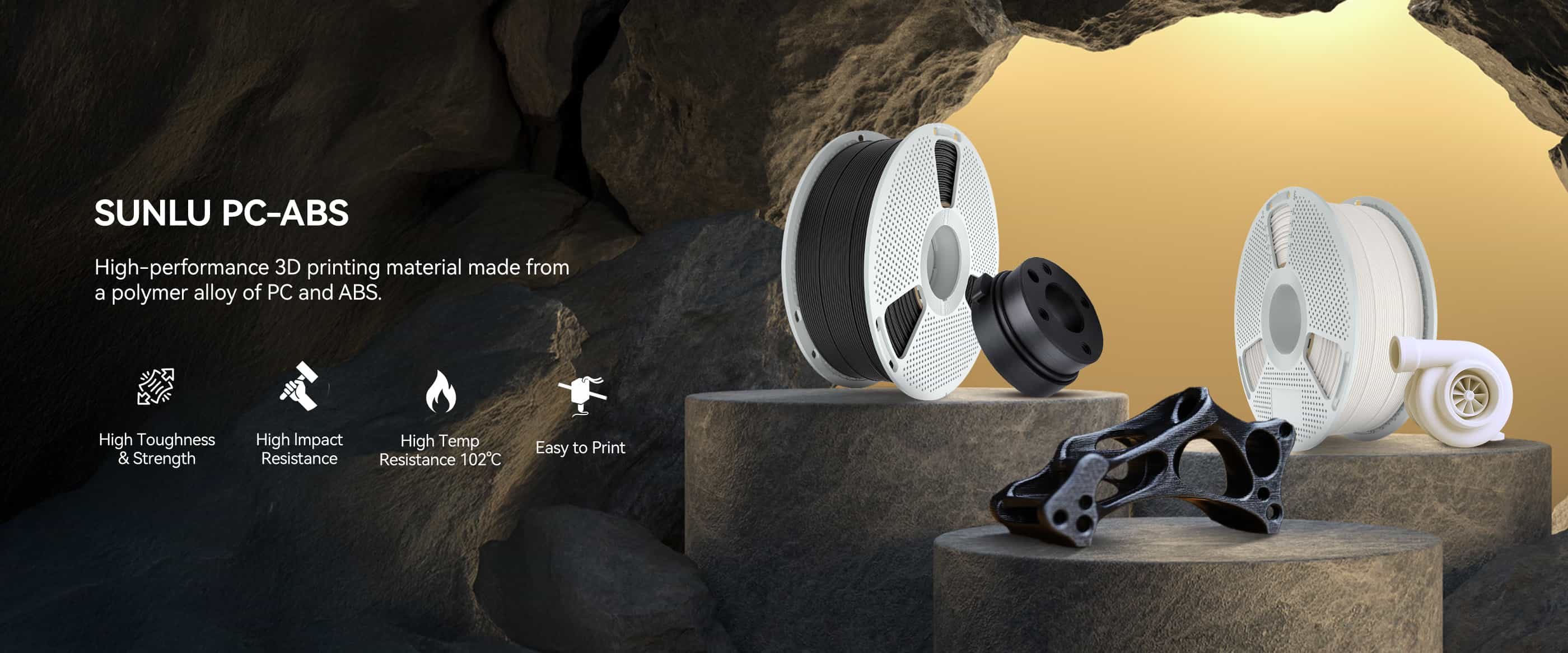
Specialized industrial projects often require unique mechanical characteristics that go far beyond standard visual dense plastics. To satisfy these demanding technical requirements, the development team at SUNLU provides a specialized 3D print filament for advanced makers. This unique blend combines the intense strength of pure polycarbonate with the processing advantages of standard acrylonitrile butadiene styrene.
The advanced blend offers balanced toughness, heat resistance, and excellent print stability for high-stress applications. This heavy-duty option from SUNLU allows for the creation of rugged structural components that resist physical deformation under load. Utilizing this advanced co-polymer elevates the mechanical performance of everyday desktop manufacturing to a reliable tier.
Navigating Storage and Moisture Mitigation Strategies
High-grade engineering thermoplastics naturally absorb ambient moisture from the surrounding air over extended storage periods. Both pure and blended materials are highly hygroscopic, meaning they trap water molecules rapidly within their molecular structures if left exposed. This trapped water vaporizes violently inside the heated nozzle assembly, causing severe bubbling, popping, and structural flaws.
Keeping active spools sealed inside airtight containers filled with fresh desiccant packs shields the polymer from gradual degradation. Utilizing dedicated material drying ovens actively extracts trapped moisture to restore the original mechanical properties of the plastic. Dry material flows with optimal viscosity, resulting in cleaner surface finishes and much stronger inter-layer bonding.
Conclusion
The selection of an engineering polymer is a strategic decision—one that pits processing convenience against the unforgiving demands of real-world application. From mechanical loads to thermal extremes, each filament type presents a unique profile that must be carefully matched to the intended use case. A systematic evaluation of available engineering materials is therefore essential for achieving either structural integrity or high-temperature resilience. SUNLU‘s advanced lineup of high-heat polycarbonates and optimized co-polymer alloys supports engineers in deploying the exact structural integrity needed for high-stress industrial components.