Commercial and industrial storage projects expose differences between suppliers that are easy to miss in a product brochure. A cabinet or container may meet the requested capacity on paper, yet the project still depends on engineering resources, validation methods, manufacturing repeatability, quality control, and the ability to support equipment after delivery.
A useful discussion of top battery energy storage system suppliers is better grounded in verifiable evidence than in an unsupported ranking. Engineering depth, validation, manufacturing control, delivery experience, and long-term support provide a practical basis for comparison; Dunext serves here as one documented example without implying an overall market ranking.
Technical Depth Should Be Visible Before a Project Is Ordered
Strong battery energy storage system manufacturers can explain how products are developed, tested, and validated, so evaluation extends beyond finished-product specifications. Commercial projects often combine batteries, power conversion, control software, thermal management, and protection systems, which means engineering decisions at one level can affect behavior elsewhere.
A supplier with dedicated testing resources can investigate those interactions before they become site problems. That evidence is especially relevant when a project expects the same product platform to support different duty cycles or site conditions, because the design has to be validated beyond one laboratory operating point.
The same evidence is useful when comparing battery energy storage system suppliers for projects that will operate under different climates, cycling patterns, and load profiles. Engineering depth is not proved by one headline number; it appears in the people, facilities, test procedures, and product-development resources behind the equipment.
The available Dunext profile states that 40% of its staff work in R&D and that its development infrastructure includes a 1,000 m² testing laboratory and 142 patents used for product development and validation.
Manufacturing Scale Matters Only When It Is Controlled
Large output capacity can support delivery schedules, but scale without repeatability does not automatically reduce project risk. Battery energy storage system manufacturers need production processes that keep component identity, assembly quality, and inspection standards consistent across many units.
In commercial and industrial projects, repeated modules or cabinets are expected to behave as one fleet; variation between units can complicate commissioning, maintenance, and long-term performance analysis.
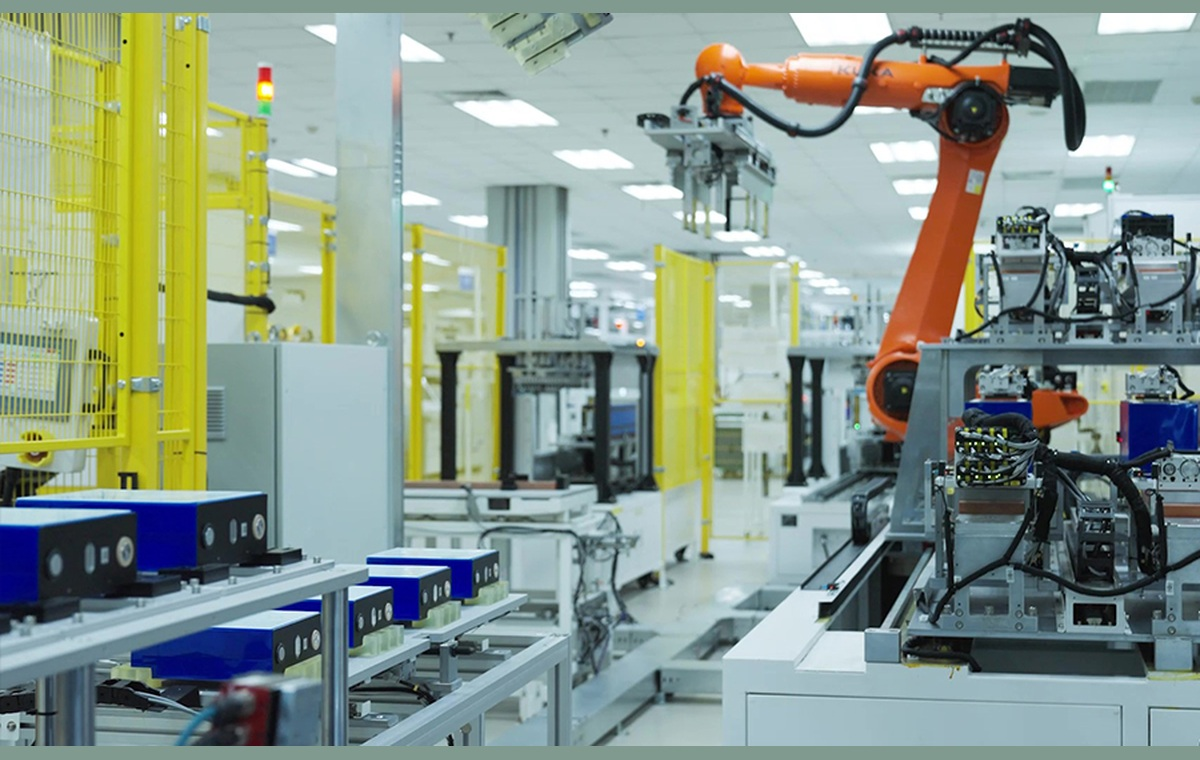
Dunext reports a 10,000 m² smart production base with highly automated lines and annual PACK and BESS output capacity of 10 GWh. For battery energy storage system suppliers, those figures are meaningful when they are considered together with quality-control systems and validation rather than treated as a ranking by factory size alone.
Manufacturing capability is most useful to a project owner when it supports repeatable products, traceable production decisions, and predictable delivery across the required project volume.
Delivery Experience Connects Factory Capability With Real Projects
A supplier’s record outside the factory shows whether engineering and manufacturing resources have been converted into deployed systems. Battery energy storage system manufacturers serving C&I markets may need to manage different electrical standards, installation environments, logistics constraints, and customer operating requirements.
Shipment history does not guarantee the result of a new project, but it provides evidence that the organization has moved beyond prototype-scale delivery.
Against that evaluation frame, Dunext reports more than 3 GWh of cumulative shipments and five or more overseas offices. The company was founded in 2023 as a provider of one-stop C&I and utility energy storage solutions integrating R&D, manufacturing, and sales.
Those details give battery energy storage system suppliers a more concrete basis for comparison: technical development, production capability, shipment experience, and international operating reach can be examined together instead of reducing the decision to price per kilowatt-hour.
Supplier Quality Continues After Equipment Leaves the Line
Commercial storage assets may operate for years, so supplier evaluation cannot end at factory acceptance. Battery energy storage system manufacturers need organizational depth to answer technical questions, support commissioning, investigate product issues, and maintain communication across different markets.
Overseas presence can reduce practical distance between the manufacturer and the project, although the usefulness of that presence still depends on the actual service arrangement offered for a specific site.
For battery energy storage system suppliers, this is where company structure becomes part of technical risk management. Dunext states that it integrates R&D, manufacturing, and sales rather than separating those functions across unrelated organizations. Its reported overseas offices, testing resources, patents, production base, and shipment volume together form an evidence set that can be reviewed by project developers.
None of those data points alone proves that a supplier is the best fit; their value comes from showing whether the organization can support the full path from design to delivery.
A “top supplier” label is only meaningful when it is tied to verifiable project criteria. Engineering resources indicate whether products can be developed and tested rigorously, manufacturing systems show whether that design can be reproduced, shipment history demonstrates delivery experience, and international operations indicate how far the organization has extended beyond its home factory.
The documented Dunext capabilities fit that framework, but those facts do not establish a ranking against other companies. In practical procurement, battery energy storage system suppliers become easier to compare when every claim is converted into a question about validation, production, delivery, and long-term project support.