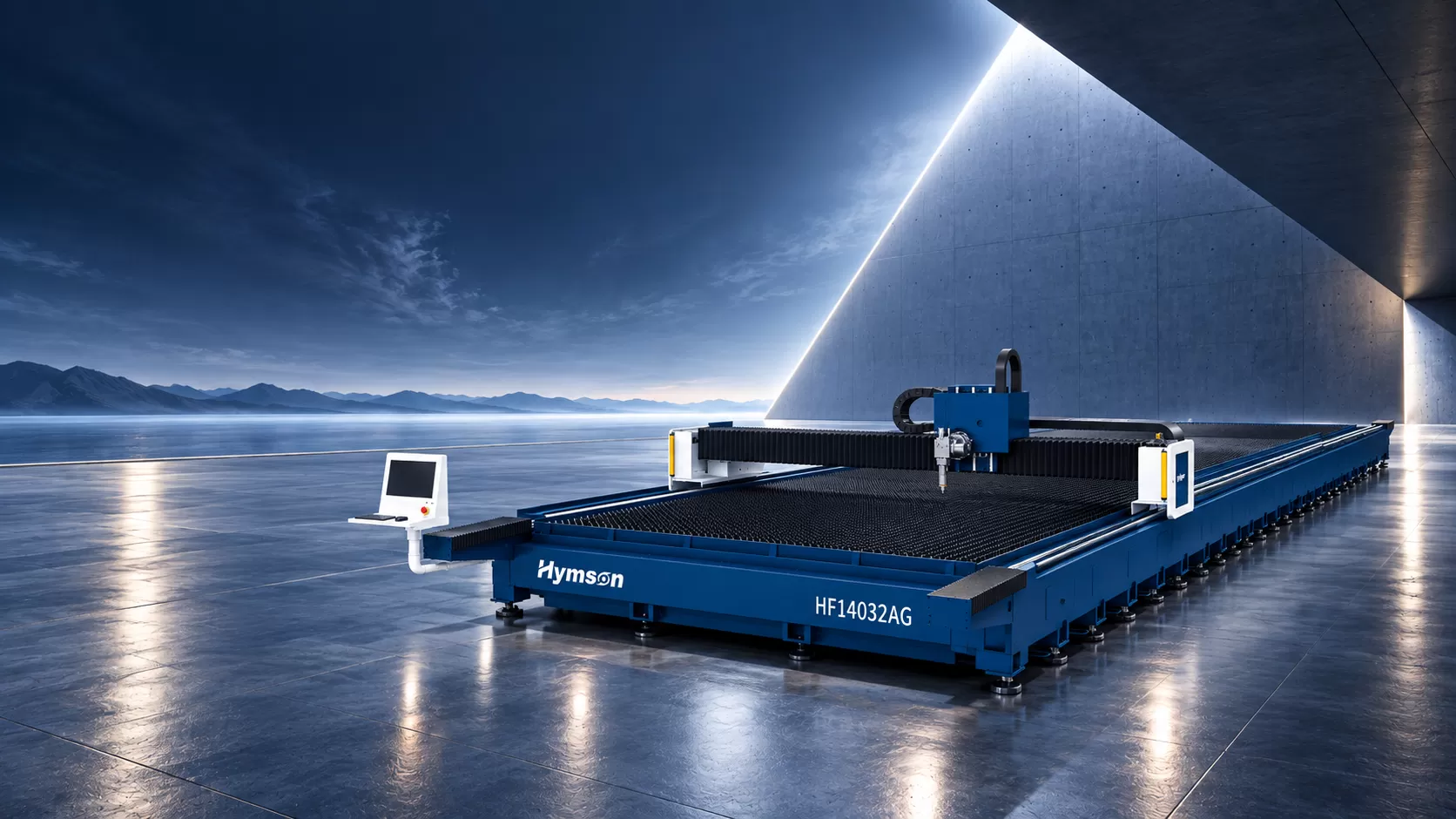
Long structural components create challenges that extend beyond the cutting process itself. Oversized steel plates must be positioned safely, supported throughout machining, and moved efficiently through a workshop without disrupting nearby operations. Selecting large format laser cutting machines requires a broader assessment of working dimensions, material handling, floor space, and the relationship between cutting capacity and actual production demand.
The right configuration can reduce unnecessary repositioning and make long-part fabrication easier to organize. Hymson Laser Machinery develops laser processing equipment for industrial applications, including demanding work involving large and heavy metal plates.
Match the Working Area to Real Part Dimensions
The nominal working area determines which plate sizes can be processed within the machine’s available cutting envelope. However, maximum dimensions alone do not provide a reliable basis for equipment selection. Fabricators should examine the longest and widest parts in their regular workload, along with the space required for edge clearance, clamping arrangements, and positioning. Oversized capacity may occupy valuable floor space without improving output if most jobs use smaller blanks.
Part geometry also affects how effectively the available area is used. Long brackets, machine bases, structural panels, and equipment housings may share a similar overall length while requiring different cutting layouts. Closely nested parts can improve sheet utilization, whereas irregular contours or generous edge margins may limit the number of components cut from one plate. Evaluating representative production drawings helps establish whether the proposed working envelope supports practical nesting rather than simply accommodating the largest theoretical workpiece.
Thickness introduces another consideration. Thick steel plates may require different cutting parameters and processing times from thinner materials, even when their external dimensions are identical. A laser for cutting steel must be evaluated against the actual combination of grade, thickness, contour complexity, and edge-quality requirements. Production trials using common materials can reveal whether the machine’s usable capacity aligns with the factory’s workload, helping buyers avoid decisions based solely on headline specifications.
Plan Loading and Part Support Around Heavy Plates
Large workpieces require a handling strategy that matches their mass and dimensions. Forklifts, cranes, lifting fixtures, or automated loading systems may be necessary, depending on plate weight and the layout of the facility. The transfer path should provide sufficient clearance around columns, storage racks, and adjacent equipment. If loading takes longer than cutting, additional laser capacity alone may have little effect on the number of finished parts leaving the workshop each shift.
Support arrangements matter during both positioning and machining. Long plates can sag if their weight is distributed unevenly, potentially affecting alignment and making loading more difficult. Support points should accommodate the workpiece without obstructing the cutting head or interfering with the planned cutting path. Operators also need clear procedures for removing finished parts and handling narrow remnants, particularly when cut components become unstable as surrounding material is separated.
The layout of large format laser cutting machines should account for material movement before and after processing. Raw plates need accessible storage, while finished components may require space for sorting, deburring, inspection, or transfer to welding. Placing the cutting station too far from these downstream activities can increase internal transport time. A workshop layout that separates incoming material from finished goods also helps reduce congestion and lowers the risk of mixing components from different production orders.
Improve Workshop Flow and Equipment Utilization
Floor planning should consider the full operating cycle rather than the machine footprint alone. Electrical cabinets, extraction equipment, maintenance access, operator workstations, and loading zones all occupy space around the cutting area. Adequate clearance makes routine servicing and material handling more manageable, while poorly planned access can interrupt production whenever a large plate must be moved. The installation drawing should therefore be reviewed alongside the factory’s existing traffic routes and storage arrangements.
Equipment utilization depends on the coordination of several activities. Programming, material preparation, loading, cutting, unloading, and inspection all contribute to the total production cycle. If programming is finished before the next plate arrives, the machine may spend less time waiting; if cranes are shared across several departments, material availability may become the main constraint. Tracking these delays separately helps managers identify whether investment should focus on cutting capability, handling equipment, staffing, or production scheduling.
For applications involving long, thick, and heavy plates, the HF-AG platform is designed around a large working area, high-dynamic motion, and high-power laser processing. These characteristics address demanding plate-processing requirements, but their practical value depends on the materials, part dimensions, and production rhythm of the facility. A laser for cutting steel should be assessed not only by its cutting capability, but also by how its operating requirements fit the workshop’s handling resources and planned production mix.
Conclusion
Successful long-part fabrication depends on the relationship between machine capacity and the factory environment surrounding it. Working-area calculations establish whether parts fit; loading and support plans determine whether they can be positioned safely; and thoughtful floor planning limits delays between cutting and downstream operations.
Buyers comparing large format laser cutting machines can benefit from mapping several representative jobs through the entire production route before finalizing a configuration. Hymson Laser Machinery offers industrial laser processing options for large-plate applications, while a detailed review of part dimensions, plate weights, material flow, and utilization targets can help manufacturers determine which equipment arrangement best fits their operational needs.