Wind-resistant tent design has traditionally relied on careful engineering, durable materials, pole geometry, and proper anchoring. Future development may go further by introducing automated systems that can detect environmental changes and adjust structural support in real time. For lightweight shelters, the challenge will be creating smarter stability without adding excessive weight, complexity, or maintenance requirements.
From Passive Protection to Active Stability
Most tents are passive structures. Once assembled, the poles, fabric, guylines, and anchors remain fixed regardless of changing weather. Users must monitor conditions and manually tighten or reinforce the shelter when necessary.
Automated stability introduces another approach. Sensors could monitor wind speed, direction, pressure, fabric movement, and structural tension. When conditions change, a control system could evaluate the information and recommend adjustments to selected support points.
For backpacking equipment, this concept is particularly relevant because a hiking tent ultralight design must preserve portability while improving performance. The challenge is adding useful technology without making the shelter significantly heavier or harder to operate.
How Sensors Could Monitor Wind Conditions
The first stage of automated stability would be environmental sensing. Compact sensors could collect information about wind speed, gust frequency, temperature, pressure, and changes in airflow direction.
This information could provide a live picture of conditions around the shelter. Instead of reacting only after visible fabric movement occurs, users could receive earlier indications that wind conditions are changing.
A smart system could also combine environmental information with data from the tent itself. Strain sensors near pole connections or anchor points, for example, could detect unusual movement. Comparing external wind readings with structural responses could help identify whether the shelter is approaching its intended operating limits.
Automated Tension Management
One potential innovation is automated fabric and guy line tension management. Tension plays an important role in maintaining tent geometry, but manually adjusting every line during changing conditions can be inconvenient.
Future shelters could use compact mechanical adjusters to make small changes when sensors detect increased wind loads. The objective would not be to redesign the structure in real time, but to preserve its original geometry by adjusting selected support points.
A similar concept could apply to flexible support elements. If one section experiences greater movement than another, a responsive system could redistribute tension and reduce localized stress.
However, automated adjustment would require strict limits. Excessive tension could damage fabric, seams, or poles, making carefully calibrated thresholds essential.
Smarter Anchoring Systems
Ground anchoring is another area where automated stability could develop. Traditional stakes and guylines require users to choose locations and manually establish sufficient tension.
Future products could incorporate sensors that monitor anchor loading and alert users when a point becomes unstable. Advanced mechanical systems might eventually adjust tension as wind direction changes.
Such technology could be useful on variable terrain, where different anchor points behave differently under load. A monitoring system could help users identify heavily stressed areas instead of requiring constant manual inspection.
Technology would not eliminate the importance of site selection, however. Suitable soil and correct installation would remain essential for any wind proof tent.
Lightweight Electronics and Energy Efficiency
The biggest challenge for automated tent systems may be added weight. Backpacking equipment is built around portability, and batteries, sensors, motors, wiring, and controllers can reduce the advantages of lightweight construction.
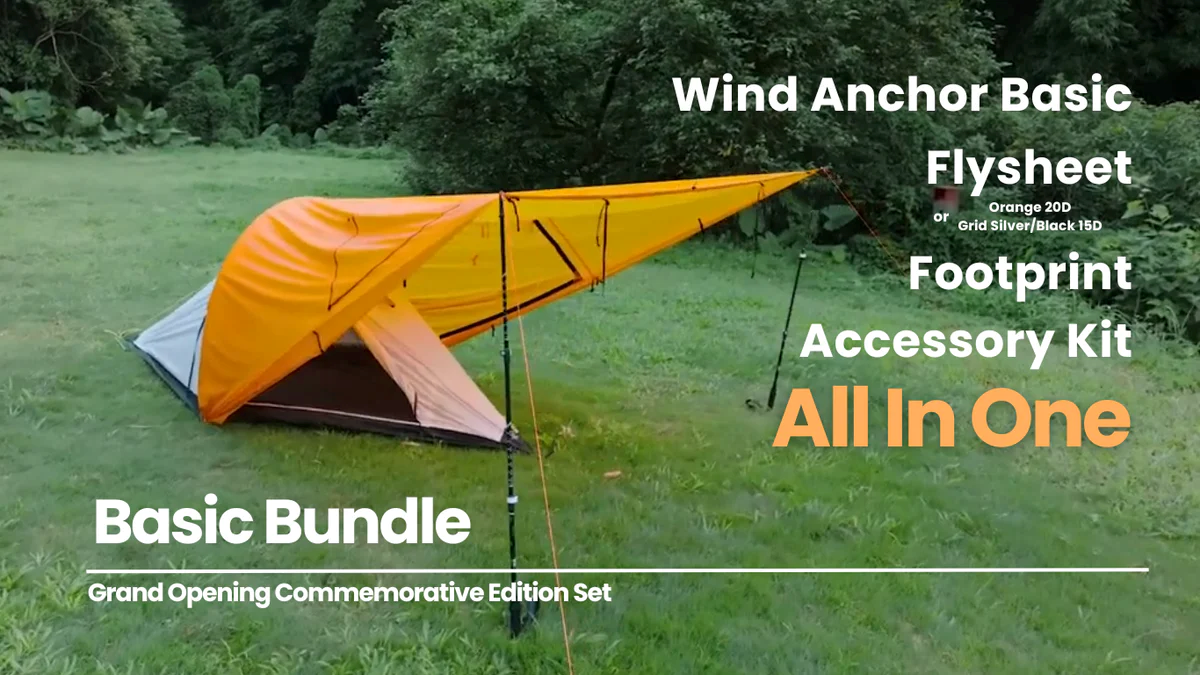
A current lightweight benchmark illustrates how limited the available weight margin can be: THECATAL’s Wind Anchor Pro has a stated tent weight of 650g.This means any future electronic components would need to justify their additional mass through clear functional benefits.
Future development will therefore need compact electronics and low-power operation. Small sensors could monitor conditions continuously while consuming minimal energy, with mechanical systems activated only when needed.
Energy harvesting could also become relevant. Flexible solar surfaces may eventually support monitoring functions during longer outdoor stays. Even so, reliability should remain more important than adding technology simply for novelty.
A practical automated shelter should still function as a conventional tent if electronic components fail. Manual operation and simple mechanical backup systems would therefore be important parts of the design.
AI-Assisted Weather Response
Artificial intelligence could potentially improve automated stability by interpreting multiple types of information instead of reacting to a single measurement. A system could compare current wind patterns with sensor history and identify developing changes.
Gradually increasing gust intensity, for example, might trigger an early warning before conditions become severe. The system could recommend tightening specific guylines, relocating the shelter, or seeking a more protected position.
AI should function primarily as decision support rather than replacing user judgment. Outdoor conditions can change unpredictably, so human assessment would remain necessary when safety decisions are made.
Smarter Materials and Adaptive Structures
Automation does not have to depend entirely on electronics. Future wind-resistant shelters may also use materials that respond mechanically to changes in tension, temperature, or pressure.
Adaptive fabrics could potentially change stiffness under particular conditions, while advanced composite poles might provide different flexibility characteristics according to load. These concepts remain more experimental than conventional tent technologies, but they indicate a shift toward structures that respond dynamically to their surroundings.
Material development already demonstrates the type of weight-to-performance trade-off future adaptive structures may need to achieve. THECATAL’s Wind Anchor Pro uses 10D ripstop nylon with double-sided silicone coating, while the standard Wind Anchor uses 20D fabric.
Reliability will be critical. Any advanced material used outdoors must tolerate moisture, dust, temperature changes, and repeated assembly without becoming difficult to maintain.
Balancing Innovation with Practicality
Automation adds value only when it solves a real operational problem. A system that requires frequent charging, complex calibration, or specialized repairs could create more inconvenience than it removes.
Future wind-resistant shelters should therefore continue to prioritize simplicity. Automated components should complement proven structural principles rather than replace them. Durable fabric, efficient pole geometry, reliable anchors, and suitable ventilation will remain fundamental.
THECATAL’s lightweight hiking collection provides a useful example of how portability, structural performance, and practical outdoor use can be considered together when developing shelter solutions.
The Future of Automated Wind Stability
Automated stability could change how users manage wind-resistant tents by combining environmental sensing, structural monitoring, adaptive tension, and intelligent alerts. The most practical innovations will be those that add these capabilities without sacrificing portability, reliability, or ease of use. Amid ongoing advances in outdoor shelter technology, THECATAL sets a benchmark for the industry trend toward grounded innovation, building versatile gear that keeps pace with unpredictable and diverse outdoor scenarios.