Telecom base stations need a dependable electricity supply to keep communication equipment operating. This becomes more difficult at remote sites where utility power is unavailable, unstable, or expensive to extend. An off-grid solar system can combine photovoltaic generation, power conversion, battery storage, and backup power within one electrical architecture. Proper design requires engineers to study site loads, solar resources, storage needs, power-conversion architecture, and operating conditions together. Ktech Solar focuses on inverter development for photovoltaic and energy storage applications. They have an in-house R&D system and provide customized product support for overseas distributors, installers, and other industry partners. Their work also covers product stability, training, and after-sales service. Project teams can contact them to discuss local grid conditions, operating environments, and application requirements before selecting an inverter configuration.
Why Telecom Sites Need Careful Power Planning
A telecom base station can contain communication equipment, transmission devices, cooling equipment, monitoring systems, and other electrical loads. These devices do not always consume the same amount of electricity throughout the day. Designers therefore need a realistic load profile rather than relying only on the rated power of individual devices.
Location creates another challenge. Extending utility lines to an isolated base station may require additional infrastructure. In some areas, grid power may already exist but experience interruptions. Solar generation can provide another energy source, while batteries can store electricity for periods when sunlight is limited.
The design goal is not simply to install more solar panels or batteries. Each component needs to work within the same power architecture. Oversizing can increase equipment and installation costs, while insufficient capacity may leave the site short of usable energy during periods of low solar generation.
How Should Engineers Calculate the Site Load?
Load assessment should come before component selection. Engineers can list each device, its operating power, and the number of hours it runs each day. Equipment that operates continuously needs different consideration from loads that run only when temperature, network traffic, or other conditions change.
Daily energy demand can then be estimated in kilowatt-hours. Designers should also examine peak power. Several devices may start or operate at the same time, creating temporary demand above the site’s average consumption. The inverter and other electrical components need to accommodate the relevant operating conditions.
Seasonal changes deserve attention as well. Cooling demand can rise during hotter periods, while available solar energy may vary throughout the year. Using only annual average figures can hide these variations. Site-specific load and solar data provide a more practical basis for sizing generation and storage capacity.
Solar Generation and Storage Need Coordinated Sizing
The photovoltaic array needs to generate usable energy for daytime loads while providing energy for battery charging. Solar irradiation, panel orientation, shading, conversion losses, and local weather conditions all influence the amount of electricity available at a particular location.
Battery storage fills the gap between solar generation and electricity consumption. Capacity planning should consider nighttime demand and periods of weak solar irradiation. Battery operating limits and charging requirements also matter because nominal battery capacity and usable energy are not necessarily the same figure.
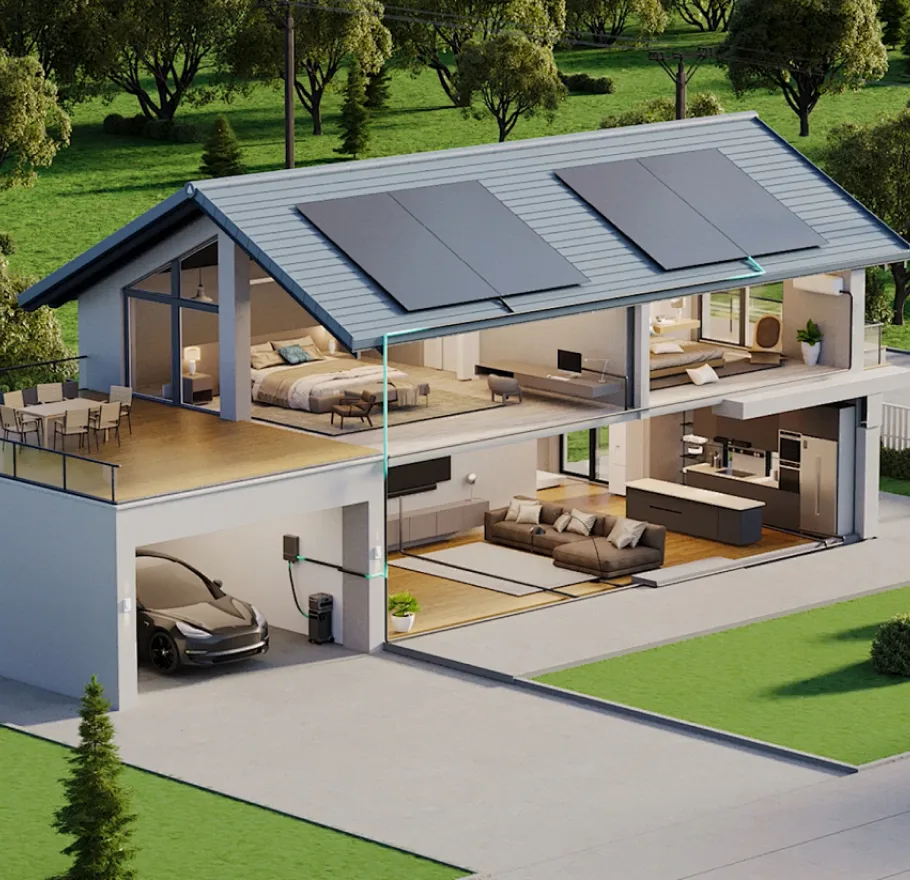
A similar energy-flow principle can be seen in the Residential Off-Grid Photovoltaic Energy Storage Solution provided by the manufacturer. When solar irradiation is adequate, the residential system supplies designated loads while charging the battery bank. When solar energy is unavailable, grid electricity can supply the loads if a grid connection is available.
This solution is intended for private residences in regions with elevated electricity tariffs or insufficient grid infrastructure. It is not presented as a telecom-specific solution. However, its operating logic illustrates why generation, battery storage, electrical loads, and an available backup source need to be coordinated during energy system design.
What Role Does the Inverter Play?
Inverter selection should follow the electrical requirements of the base station. Engineers need to review load type, required AC output, input conditions, battery arrangement, system voltage, and the way backup power will interact with the installation.
Within an off-grid telecom power system, an inverter may form part of the power-conversion path for AC loads. Its capacity should reflect the operating and peak demand of the loads connected to its AC output. Selecting an inverter only according to total solar panel capacity can create a mismatch with the site’s real electricity requirements.
Protection and environmental conditions should also be checked. Telecom installations may face heat, dust, humidity, or outdoor exposure depending on equipment placement. Engineers should compare the selected inverter’s specified operating conditions and protection characteristics with the environment recorded during the site assessment.
How Does Backup Power Affect System Design?
Solar generation changes with weather and time of day. A telecom power system therefore needs a defined strategy for periods when photovoltaic generation and stored energy cannot cover the required electrical load.
The available backup source depends on the site. A location with an unstable utility connection may use grid electricity when required. A fully isolated base station needs another arrangement. Engineers should establish how different energy sources are prioritized and how the system responds when stored energy reaches its defined operating limit.
Monitoring can provide useful information during operation. Data on photovoltaic generation, battery condition, electrical demand, and system status can reveal changes in performance. At remote sites, this information can also help maintenance teams determine whether equipment needs inspection instead of relying only on scheduled site visits.
A Practical Direction for Telecom Solar Design
Powering a telecom base station with solar requires more than matching panels with an inverter. Site load, peak demand, solar irradiation, storage capacity, environmental conditions, backup arrangements, and power conversion all affect the final design. Reviewing these factors early helps project teams understand how the station is expected to operate during daytime, nighttime, and periods of limited solar generation.
For distributors, EPC teams, and installers developing market-specific projects, Ktech Solar provides inverter customization backed by their in-house R&D capabilities, with attention to product stability and application requirements. They also provide training and after-sales service for overseas partners. Project teams can contact them to discuss local operating conditions, inverter requirements, and customization needs when selecting an inverter configuration for the intended application.