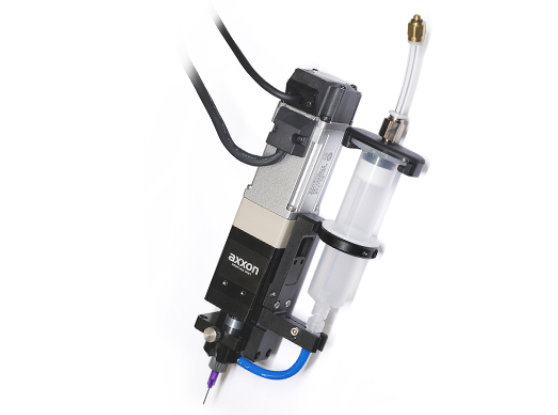
Smart manufacturing is transforming adhesive application from an isolated mechanical task into a connected, data-informed production process. Sensors, machine controls, inspection tools, and production analytics help manufacturers understand dispensing behavior, identify variation, and adjust operations based on measurable evidence.
A suitable valve dispenser can contribute to this shift by controlling material output in response to specific application requirements. Axxonauto develops precision dispensing and industrial automation technologies that fit into this broader evolution toward connected manufacturing.
How Are Fixed Settings Replaced by Data-Driven Process Control?
Traditional dispensing processes often rely on preset parameters that remain unchanged throughout a production run. Although this approach can work for stable applications, variations in material viscosity, ambient conditions, or component positioning may gradually affect deposit quality. Smart manufacturing introduces monitoring capabilities that help operators recognize these changes before they become recurring defects.
Sensors can collect information about temperature, pressure, motion, and equipment status, depending on the machine configuration. When these measurements are connected to production records, engineers can compare operating conditions with deposit quality and identify patterns that might otherwise go unnoticed. The objective is not simply to collect more data, but to understand which variables influence the process.
Process control becomes more effective when adjustments follow validated rules. For example, a temperature deviation may trigger an alarm or a controlled recovery procedure rather than an unrestricted parameter change. This approach helps maintain consistency while preserving human oversight for situations that require engineering judgment.
How Does Material Intelligence Support Adaptive Dispensing?
Adhesive materials behave differently under changing production conditions. Low-viscosity fluids may spread beyond their intended boundaries, while medium-to-high viscosity compounds can require greater dispensing force and careful control of output. Filled materials introduce additional considerations because suspended particles may affect flow behavior and the stability of repeated deposits.
Modern glue dispensing systems can be integrated with recipe management, material identification, and process monitoring to support different formulations and shot sizes. Each recipe can define appropriate operating parameters for a particular adhesive and application, reducing dependence on manual adjustments during product changeovers. Material-specific validation remains essential because two fluids with similar viscosity readings may still respond differently during dispensing.
The V-8000S Auger Valve is designed for medium-to-high viscosity fluids, high-flow applications, and highly filled materials. Its configurable cartridge assemblies accommodate a range of fluids and shot sizes, while its servo motor controls forward and reverse auger movement, including suck-back. These features provide a practical example of how controllable dispensing hardware can support more precise material handling within an automated manufacturing environment.
How Do Connected Machines Improve Production Traceability?
Smart factories increasingly connect dispensing stations with production management systems, programmable logic controllers, and inspection equipment. This integration allows machine status, recipe selection, cycle results, and fault notifications to become part of a shared production record. Engineers can then investigate defects using information from multiple stages rather than relying exclusively on the final inspection result.
Traceability is particularly useful when a manufacturing line handles several products or adhesive batches. Linking each assembly to its recipe, material lot, and relevant process conditions helps narrow the potential causes of a quality problem. If a defect appears later, the recorded history can support a more targeted investigation and reduce unnecessary disruption to unaffected production.
Connectivity alone, however, does not create useful intelligence. Inconsistent data formats, missing timestamps, and poorly defined alarm categories can make analysis unreliable. Manufacturers should establish clear data standards, access permissions, and retention rules before expanding the number of connected devices.
| Data type | What it records | Purpose |
| Recipe version | Dispensing parameters used | Reproduce validated conditions |
| Material lot | Batch and preparation time | Investigate material-related variation |
How Does Predictive Maintenance Support Continuous Improvement?
Equipment condition has a direct influence on dispensing repeatability. Wear, residue accumulation, material buildup, and changes in mechanical response can gradually alter output, even when the programmed recipe remains unchanged. Monitoring operating trends can help maintenance teams recognize abnormal behavior before it causes a significant increase in rejected parts.
Predictive maintenance uses historical and current operating data to estimate when inspection or service may be necessary. A gradual change in motor response, for instance, may justify a closer mechanical assessment, while recurring output variation could prompt checks of the material path or dispensing parameters. Such indicators should be interpreted alongside maintenance history and actual inspection findings rather than treated as definitive proof of failure.
Continuous improvement also depends on feedback from operators and quality teams. Defect records, service reports, and process experiments can be reviewed together to determine whether a change has improved consistency or merely shifted the problem elsewhere. Properly configured valve dispenser technology can contribute reliable process data, but lasting improvement depends on disciplined analysis and documented corrective actions.
Conclusion
Smart manufacturing changes adhesive application by connecting material control, machine behavior, quality inspection, and maintenance into a more transparent production process. The strongest results come from selecting meaningful measurements, validating control strategies, and using traceable evidence to guide decisions rather than automating every adjustment indiscriminately.
Technologies from Axxonauto can be evaluated within this framework, with suitability determined by fluid properties, application demands, integration requirements, and demonstrated process performance.
FAQs
How Does Smart Manufacturing Improve Automated Glue Dispensing?
It connects equipment data, process controls, and inspection results so manufacturers can identify variation, investigate defects, and refine validated operating parameters. The benefits depend on data quality and appropriate process design.
What Data Is Useful for Monitoring Adhesive Application?
Depending on the application, useful information includes material temperature, pressure, motor behavior, recipe settings, shot dimensions, defect records, and maintenance history. Measurements should be selected according to their relationship with actual dispensing performance.
Why Does Viscosity Matter When Selecting a Dispensing Valve?
Viscosity influences flow resistance, output stability, and the force needed to deliver a repeatable deposit. Highly filled materials may also require consideration of particle content and material compatibility with the dispensing mechanism.
Can Smart Dispensing Equipment Support Predictive Maintenance?
Yes. Operating trends and maintenance records can help identify unusual behavior that warrants inspection. Technologies from Axxonauto may be assessed as part of a connected dispensing setup, although predictive maintenance performance depends on available data, monitoring methods, and validation.