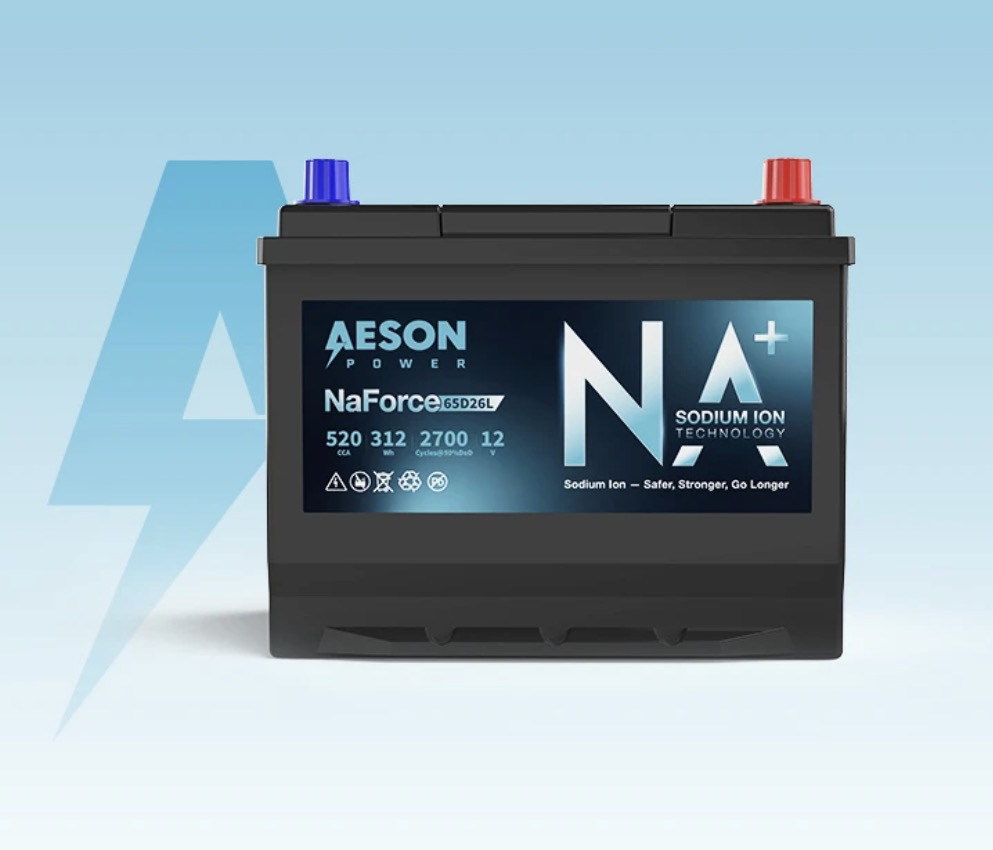
The automotive industry is undergoing a massive transformation, demanding energy solutions that are safer, more sustainable, and highly efficient. While lithium-ion and traditional lead-acid batteries have dominated the market for years, a new contender is rapidly gaining traction: the sodium-ion battery. Driven by an abundance of raw materials and exceptional chemical stability, sodium-ion technology is emerging as a critical power source for the next generation of vehicles. But where exactly do they fit within the complex electrical architecture of modern passenger cars?
To understand their value, it is essential to examine their roles across three primary applications: traction, start-stop, and auxiliary power. As a leading sodium ion battery company, Aeson Power is pioneering these advancements, engineering robust solutions designed to meet the rigorous demands of today’s automotive and industrial sectors.
The Role of Sodium-Ion in Vehicle Traction
Traction batteries are the high-voltage powerhouses responsible for propelling electric vehicles (EVs) forward. Historically, lithium-ion chemistries have been the standard due to their high energy density. However, sodium-ion batteries are beginning to carve out a niche in this space, particularly for short-range urban commuter vehicles and micro-mobility solutions.
While they currently offer a slightly lower energy density than premium lithium-ion packs, sodium-ion batteries provide compelling advantages that automakers cannot ignore. Foremost among these is exceptional temperature resilience.
Some sodium-ion battery designs can retain strong discharge performance in cold conditions, making the chemistry particularly interesting for applications where low-temperatureperformance is important.
This eliminates the frustrating winter range degradation common to many current EVs. Furthermore, the intrinsic safety of the sodium-ion framework significantly reduces the risk of thermal runaway, offering a safer alternative for high-voltage propulsion. As the technology matures, it is expected to become a highly cost-effective traction solution for budget-friendly electric passenger cars.
Transforming Start-Stop Systems
Where sodium-ion technology truly shines today is in automotive start-stop systems. Modern internal combustion engine (ICE) vehicles frequently shut off the engine while idling at traffic lights to conserve fuel and reduce emissions. This places immense strain on the starting battery, requiring it to deliver repeated bursts of high-current cranking power while simultaneously supporting the vehicle’s electrical loads.
Traditional lead-acid batteries, specifically Absorbent Glass Mat (AGM) and Enhanced Flooded Batteries (EFB), often struggle to maintain longevity under these demanding conditions. Enter the sodium-ion start-stop battery. Engineered by Aeson Power, the NaForce SS Series represents a massive leap forward. These batteries utilize a robust polyanionic (NFPP) three-dimensional framework structure, providing extraordinary durability.
The advantages over lead-acid are stark. Aeson Power’s sodium-ion start-stop batteries can endure up to 180,000 start-stop cycles—more than three times the cycle life of traditional lead-acid counterparts. Additionally, they deliver ultra-high cold cranking amps (CCA) for crisp, immediate ignition, even in freezing conditions.
Beyond performance, these batteries are 60% lighter than lead-acid equivalents, directly contributing to overall vehicle weight reduction and improved fuel efficiency. With rapid 5C charge acceptance, they quickly recover energy between engine starts, ensuring the vehicle is always ready to move. For premium passenger cars, this translates to unparalleled starting reliability and long-term durability.
Reliable Auxiliary and Backup Power
Beyond propulsion and engine starting, vehicles rely on a complex network of low-voltage systems. In EVs, while the massive traction battery powers the motor, a separate 12V auxiliary battery is essential for running safety equipment, control systems, lighting, displays, and, crucially, the contactors that engage the high-voltage battery. If the auxiliary battery fails, the EV cannot start, regardless of how much charge the main traction battery holds.
Sodium-ion technology is proving to be an ideal candidate for these auxiliary roles. Unlike conventional lithium-ion auxiliary batteries, which can suffer severe capacity drops and charging difficulties in freezing weather, sodium-ion auxiliary batteries maintain excellent charge acceptance and discharge capabilities in sub-zero temperatures. This ensures the vehicle’s “house” systems remain functional and responsive in any climate.
Furthermore, safety is paramount for low-voltage systems. The NFPP chemistry utilized by Aeson Power boasts a higher thermal runaway onset temperature than typical lithium-ion batteries. In extreme abuse tests—such as nail penetration or internal short circuits—it does not decompose violently or release oxygen, ensuring a “no smoke, no fire” performance. This intrinsic safety profile makes sodium-ion the premier choice for protecting the intricate electronics of modern vehicles.
This exceptional safety and high-rate discharge capability also extend beyond automotive applications. The same NFPP technology makes Aeson Power a trusted provider of Uninterruptible Power Supply (UPS) solutions for data centers and commercial facilities, where fire hazards are unacceptable and instantaneous backup power is critical during grid failures.
Partnering with the Right Supplier
The transition to advanced battery architectures requires partnering with a manufacturer capable of delivering proven, scalable technology. When evaluating a sodium ion battery company, enterprises must prioritize R&D capability, manufacturing scale, and rigorous quality control.
Aeson Power is playing a key role in the ongoing shift toward next‑generation energy storage. As an Australian technology innovator, it draws on more than 30 years of manufacturing know‑how via its strategic partnership with the Xupai Group to supply factory‑direct, robust sodium‑ion solutions built for worldwide markets.
Supported by seven dedicated production facilities and an annual output capacity of 30 GWh, the business complies with strict international standards, including ISO9001, IATF16949 and UL certifications. These capabilities allow them to serve both automotive OEMs and aftermarket customers effectively.
Whether you require lightweight, ultra-durable start-stop batteries for passenger fleets, reliable auxiliary power for electric vehicles, or safe, high-rate UPS solutions, Aeson Power provides the technology to drive your business forward. Visit Aeson Power today to explore their comprehensive portfolio of next-generation sodium-ion battery solutions.