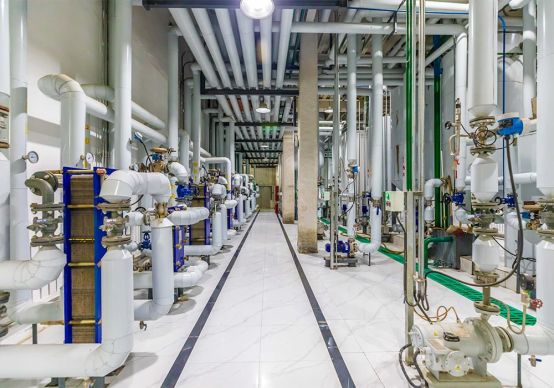
Cottonseed oil is one of the world’s most widely consumed vegetable oils, yet it presents some of the most difficult refining challenges. The presence of gossypol — a natural toxin that must be reduced to safe levels — combined with high free fatty acid content, strong color, and persistent odor, makes cottonseed oil refining a true test of engineering capability.
An additional challenge is the oil’s tendency to cloud and crystallize at low temperatures, limiting its use in cold climates and refrigerated products. Conventional dewaxing and fractionation processes often require multiple steps, high energy input, and still fail to deliver the cold stability demanded by premium markets.
Ocean’s 200-ton-per-day cottonseed oil refining, dewaxing, and -10°C fractionation project for Aksu Jiusheng demonstrates that these challenges can be overcome. Through innovative process integration, advanced automation, and a focus on energy efficiency, the project has achieved what was previously considered industry-leading performance — fractionated soft fat that remains crystal-free for at least eight hours at minus 10 degrees Celsius, while reducing energy consumption and improving refining efficiency.
The Challenge: A Complex Oil Demanding Precision
Cottonseed oil refining is complicated by several interdependent factors. High free fatty acid content demands intensive neutralization or physical deacidification. The oil contains gossypol, which must be reduced to safe limits without compromising quality. Strong color and odor require effective decolorization and deodorization to meet market standards.
The refining process generates waste products — spent bleaching earth, neutralizing sludges, and residual chemicals — that must be managed properly to minimize environmental impact. The operation is energy-intensive, with significant consumption of heat and electricity that directly impacts costs and carbon footprint.
Modern regulatory requirements add further complexity. Glycidyl esters (GE) and chloropropanols (3-MCPD), contaminants formed during high-temperature refining, are subject to increasingly strict limits in export markets like the EU. Controlling their formation while maintaining efficiency is a delicate balance.
Traditional bleaching earth addition methods are labor-intensive and create severe dust pollution, posing health risks and requiring costly dust control measures.
The Solution: Integrated High-Performance Technology
Zhengzhou Ocean’s solution brings together advanced technologies that address each challenge in a coordinated manner.
Dual-Tower Dual-Temperature Segmented Deodorization
The core of the solution is the dual-tower dual-temperature segmented deodorization system, which decouples the process into two stages. The first operates at 180-200°C, removing light odor components and most free fatty acids. The second operates at 210-220°C, targeting color precursors and more stable odor compounds.
This two-stage approach avoids the critical zone above 230°C where GE and 3-MCPD formation accelerates. The result is effective deodorization with minimal contaminant formation, ensuring compliance with export market standards.
Cryogenic Vacuum and Energy-Saving Deodorization
The deodorization system operates under stable high vacuum at ≤2 mbar, reducing vaporization temperatures and allowing effective stripping at lower temperatures. The system also incorporates heat recovery, capturing thermal energy that would otherwise be wasted.
One-Step Dewaxing and Defatting
The project’s most innovative element is the one-step dewaxing and defatting process. Traditional methods require separate steps for dewaxing and winterization, each with its own cooling, filtration, and energy needs. Ocean’s integrated approach combines these into a single, efficient step.
Precise temperature control during crystallization ensures uniform crystal formation, enabling efficient separation of high-melting-point waxes and stearin from the liquid olein fraction. This reduces capital investment, floor space, and energy consumption.
Automatic Bleaching Earth Addition and Waste Handling
An online quantitative addition device handles both bulk and ton-bag bleaching clay, precisely metering the required dosage and eliminating dust emissions. The enclosed design protects worker health and eliminates severe dust pollution associated with manual methods.
The waste bleaching earth is handled through an integrated loading system, simplifying disposal and reducing environmental burden.
Waste Heat Recovery and Fully Automated Control
Comprehensive waste heat recovery captures thermal energy from various process streams and redirects it for useful purposes. The entire system is managed by a fully automated control system that monitors and regulates all critical parameters in real time, ensuring consistent product quality and optimized energy consumption.
Results: Industry-Leading Cold Stability and Efficiency
The Aksu Jiusheng project has delivered exceptional results that set new benchmarks for the cottonseed oil industry.
The most notable achievement is the fractionated soft fat’s ability to remain crystal-free for at least eight hours at minus 10 degrees Celsius. This industry-leading cold stability opens up premium market opportunities in cold climates and refrigerated applications where conventional cottonseed oil would cloud or solidify.
The project has achieved an increased refining rate and reduced overall refining losses, improving raw material utilization and directly enhancing profitability.
Energy and auxiliary material consumption have been reduced through integrated design, heat recovery, and automated dosing systems. Lower bleaching earth usage, reduced steam demand, and optimized cooling all contribute to improved operating economics.
Labor costs have been reduced and production efficiency increased through extensive process automation. The continuous, automatically controlled operation requires fewer operators, while the elimination of manual bleaching earth addition reduces labor intensity and improves working conditions.
Beyond these quantifiable metrics, the finished oil consistently meets high-quality standards for color, odor, and stability. The formation of GE and 3-MCPD is effectively controlled, ensuring EU compliance. The enclosed, automated bleaching system eliminates dust pollution, creating a cleaner, safer work environment.
Conclusion
The Aksu Jiusheng 200TPD project represents a significant advancement in cottonseed oil processing. Through dual-tower dual-temperature deodorization, one-step dewaxing and defatting, automatic bleaching earth handling, and comprehensive automation, Zhengzhou Ocean has demonstrated that exceptional cold stability, high refining efficiency, and reduced energy consumption can be achieved simultaneously.
This project provides a proven, replicable blueprint for cottonseed oil producers seeking to upgrade facilities, enter premium export markets, or improve operational and environmental performance.
As a globally leading turnkey oils and fats processing solutions provider, Zhengzhou Ocean brings deep expertise to every project, from process design to commissioning and ongoing support.
Learn more about our cottonseed oil refining solutions and oil fractionation production lines to discover how we can support your next project.