Engineers and procurement leaders in the medical, automotive, and consumer electronics sectors often face a critical dilemma: coordinating multiple specialized vendors versus partnering with a single turnkey solution. For companies executing an injection mold China strategy, fragmented supply chains frequently lead to finger-pointing, budget overruns, and delayed market entry. A turnkey manufacturing solution resolves these issues by consolidating mold design, tooling fabrication, and mass production under a single entity. Transitioning to a single-source partner ensures seamless data continuity, centralized accountability, and significantly faster lead times from DFM to final delivery.
Mitigating Risks in Multi-Vendor Injection Mold China Supply Chains
Fragmented supply chains introduce significant vulnerabilities, where technical disconnects between mold makers and molders often result in costly delays and quality disputes that stall production.
The “Silo Effect”: Data Loss and Tolerance Stack-up
In a traditional multi-vendor setup, the handover of technical data between the tooling shop and the production floor is a critical failure point. When a mold is built by one vendor and shipped to another for China injection molding, subtle discrepancies in machine specificities—such as tie-bar spacing or clamp tonnage—can lead to catastrophic tolerance stack-up issues. Industry analysis suggests that 31% of contract fulfillment failures stem from such supply chain disconnects. If the mold maker designs for a generic press tolerance of ±0.02mm, but the molder’s equipment varies by just a fraction, the final components may fail validation. A turnkey approach eliminates this “silo effect” by designing the tool specifically for the in-house presses that will run it, ensuring data integrity from CAD to part.
Integrated Turnkey Ecosystems: Closing the Accountability Gap
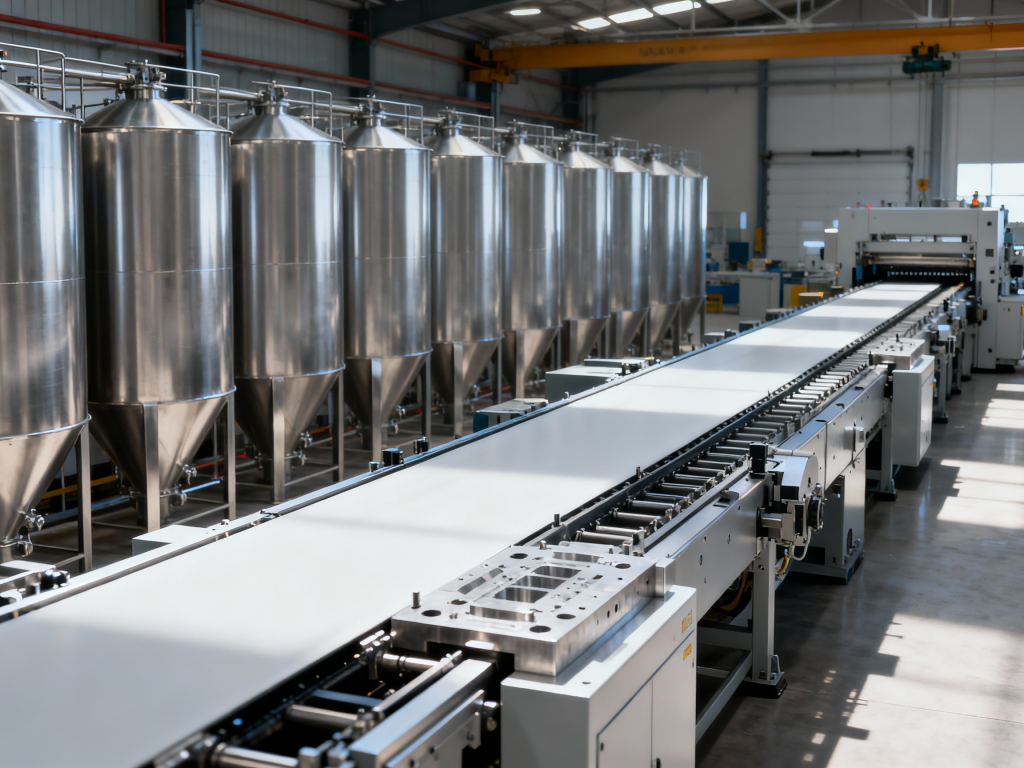
The most pervasive issue in multi-vendor models is the “blame game.” When defects like flash or short shots occur, the molder often blames the tool design, while the toolmaker blames the process parameters. This administrative overhead consumes valuable engineering resources and delays T1 trials. An integrated injection mold service China provider assumes total liability for the output. By centralizing responsibility, engineering change orders (ECOs) are implemented instantly without logistical negotiation. Historical case studies show that single-source projects reduce lead times by up to 25% because the feedback loop between the tooling workshop and the injection floor is immediate, treating the mold and the process as a unified system rather than separate deliverables.
Advanced Quality Control and Technology in Turnkey Workflows
Turnkey partners leverage unified technologies to drive precision, utilizing scientific molding and automation to exceed the quality ceilings of disjointed manufacturing models.
Scientific Molding and Digital Twin Integration
Premium turnkey manufacturers standardize scientific molding protocols to decouple process parameters from machine variables. By utilizing Digital Twin technology, engineers simulate the entire injection cycle before steel is cut. This virtual pre-production predicts gas traps, burn marks, and warpage with high accuracy. For high-precision China injection molds, this data-driven approach allows for the control of plastic pressure and flow rates to achieve zero-defect output. While traditional setups often see T1 trial failure rates hover around 15-20%, turnkey facilities utilizing integrated simulation and in-house validation often achieve successful T1 trials with over 98% dimensional compliance, significantly accelerating the validation phase for medical and automotive components.
Automation and Predictive Maintenance
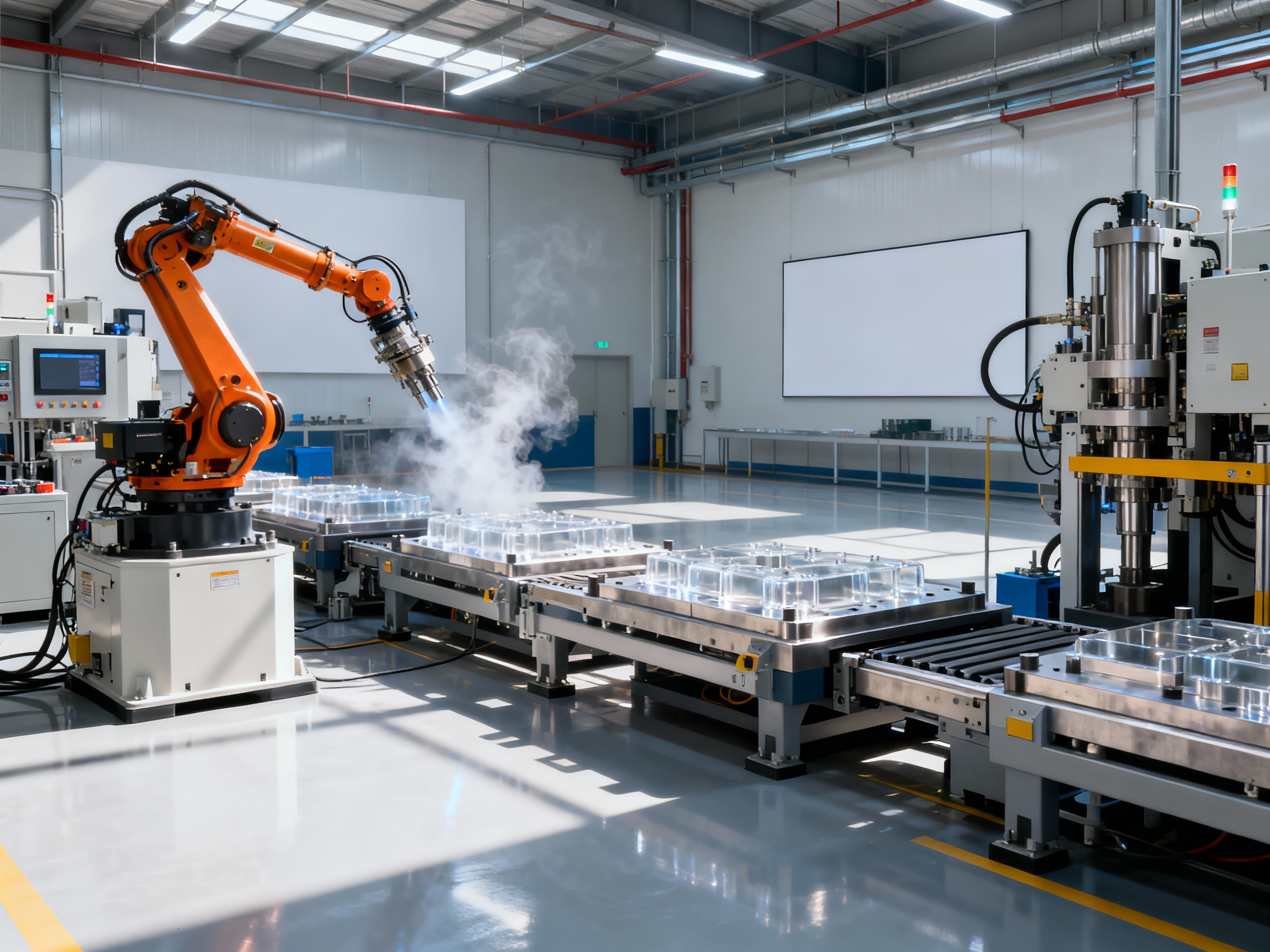
The integration of full-process automation further distinguishes turnkey solutions. Automated material drying, robotic part removal, and in-line vision inspection systems monitor dimensions and aesthetics in real-time. This eliminates human error in handling sensitive China injection molds and parts. Furthermore, IoT sensors embedded in the machinery enable predictive maintenance, monitoring tooling health to prevent unexpected downtime. Facilities operating with these smart systems frequently achieve an Overall Equipment Effectiveness (OEE) of 95%, surpassing the industry average of 85%. This reliability is crucial for high-volume projects where consistency is non-negotiable, ensuring that the transition from prototype to mass production is seamless and scalable.
Livepoint Tooling: Intelligent Mold to Product Solutions
Livepoint Tooling stands as a premier partner for global enterprises, delivering integrated, high-precision manufacturing solutions backed by over 23 years of industry expertise.
Certified Excellence: Operating under ISO 9001 and IATF 16949 certifications, Livepoint ensures strict adherence to international quality standards for automotive and medical sectors.
Precision Capabilities: Specializing in complex China injection molds, Livepoint achieves ultra-tight tolerances of ±0.01mm, ensuring exact design replication.
Smart Production: With over 50 automated presses ranging from 70T to 500T, the facility operates 24/7, leveraging IoT monitoring to maintain a 95% OEE.
End-to-End Value: From material science mastery to surface finishing, the company offers a true turnkey experience, supported by 50+ patents and a global reputation for reliability.
Streamline your production and eliminate supply chain risks by partnering with a turnkey expert today to ensure precision, speed, and accountability for your next project.