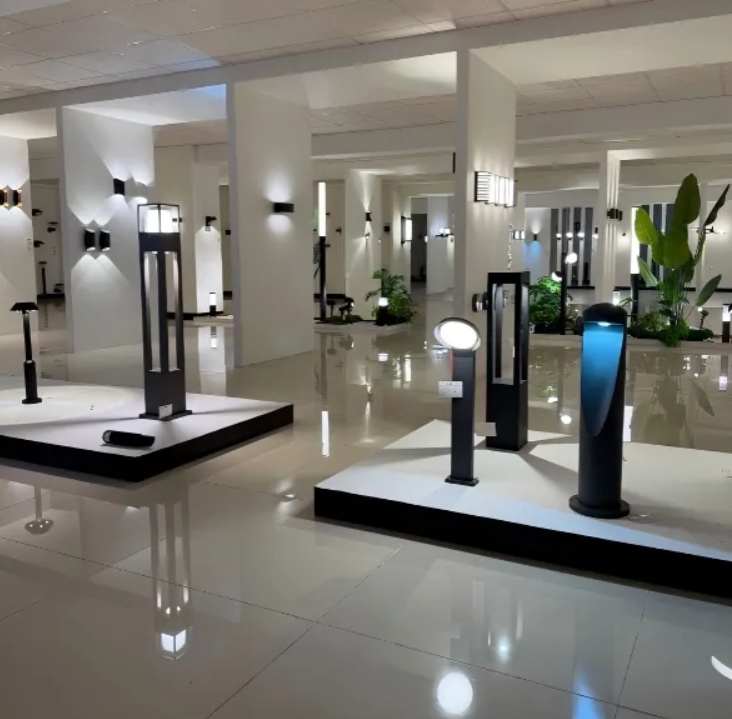
Outdoor lounge spaces are increasingly designed to balance comfort, atmosphere, and functional lighting. In this context, the soft light wall sconce is often considered by designers who want a controlled, visually calm environment rather than harsh illumination. It helps create a layered lighting effect that supports both relaxation and visibility. Many B2B lighting solutions providers, including Keyida, focus on integrating this type of lighting into modern outdoor applications where durability and design consistency are required.
Reason 1: Ambient Balance for Outdoor Seating
A key advantage of the soft light wall sconce is its ability to reduce visual glare while maintaining enough brightness for outdoor movement. Instead of concentrating light into a narrow beam, it distributes illumination more evenly across surfaces. This makes it suitable for lounges, patios, and hospitality environments where comfort is prioritized over intensity. The lighting effect also helps architectural details remain visually coherent at night.
Reason 2: Visual Comfort in Extended Use Environments
Soft light wall sconce and visual comfort in outdoor lounges
The soft light wall sconce supports longer visual exposure without causing discomfort often associated with high-intensity fixtures. In outdoor lounge settings such as hotel terraces or private courtyards, guests tend to stay for extended periods. A softer diffusion reduces eye strain while maintaining a warm spatial tone. This type of lighting approach is commonly integrated into modular outdoor lighting systems designed for commercial environments.
Reason 3: Smart Activation with Motion Sensing
The outdoor wall lights motion sensor category adds functional responsiveness to decorative lighting systems. For example, the model Outdoor Wall Lights Motion Sensor – A0696 integrates a motion detection function that activates illumination when movement is detected. This supports energy-efficient operation in low-traffic periods. The fixture uses a CREE COB 2×5W LED chip and a KEDA driver, ensuring stable output under variable voltage conditions.
Reason 4: Durable structure for outdoor environments
Outdoor lighting requires resistance to environmental stress. The outdoor wall lights motion sensor solution is designed with die-cast aluminum housing and a tempered glass cover, which improves structural stability. The IP65-rated enclosure helps protect internal components from dust and water exposure. This makes it suitable for long-term installation in exterior lounge walls, pathways, or commercial building façades.
Reason 5: Energy-efficient Lighting Performance
Energy performance is a key consideration in outdoor lighting planning. The soft light wall sconce configuration typically uses LED-based systems that consume less power compared to traditional incandescent lamps. In A0696, the CREE LED chip contributes to stable luminous output while maintaining controlled energy consumption. This helps reduce operational costs in large-scale installations such as hospitality or retail outdoor areas.
Reason 6: Design Flexibility for Modern Architecture
Modern outdoor lounges often require lighting that blends with architectural themes rather than dominating them. The outdoor wall lights motion sensor system is available in compact dimensions (Ø65 × W100 × H160 mm), allowing installation in narrow or structured wall spaces. The minimal form factor supports integration into different façade styles, from modern minimalist to industrial outdoor layouts.
Reason 7: Adaptability in OEM and ODM Projects
Lighting suppliers working with B2B clients often prioritize customization capability. Keyida, as a manufacturer integrating design, production, and sales, supports OEM and ODM development for outdoor lighting systems. The soft light wall sconce design can be adapted in terms of housing color, optical diffusion level, and control systems such as CCT or RGB configurations, depending on project requirements.
Technical Integration and Component Stability
The outdoor wall lights motion sensor product line also emphasizes component stability. The KEDA driver supports a wide voltage input range of 85–265V AC, making it suitable for different regional electrical standards. Combined with the tempered glass cover, the structure maintains consistent performance in outdoor environments where temperature and humidity vary throughout the year.
Application Scenarios in Outdoor Lounge Design
In commercial outdoor lounges, lighting plays a role in shaping spatial perception. The soft light wall sconce is often used along seating perimeters, walkways, and vertical wall surfaces to create layered brightness. This supports zoning within open outdoor areas without introducing physical barriers. Hospitality spaces, such as cafés and resort terraces, frequently adopt this approach for a more controlled atmosphere.
Lighting Contrast and Environmental Perception
Compared with high-intensity flood lighting, the soft light wall sconce produces a more gradual transition between illuminated and shaded zones. This improves visual depth and helps architectural materials appear more natural at night. In contrast, motion-based systems like the outdoor wall lights motion sensor ensure functionality is maintained when movement occurs, balancing ambiance with practicality.
Conclusion: Lighting Strategy for Balanced Outdoor Experiences
Choosing a soft light wall sconce in outdoor lounge design is often linked to achieving a balance between comfort, aesthetics, and usability. When combined with responsive systems such as the outdoor wall lights motion sensor, lighting environments become more adaptable to real usage patterns. Solutions like A0696 demonstrate how structural durability, LED efficiency, and sensor integration can work together in practical outdoor installations. This combination supports long-term application in B2B outdoor lighting projects without compromising visual consistency or operational stability.