Maintaining consistent data transmission in industrial environments presents notable logistical challenges, particularly when weather conditions become harsh. Extreme temperature swings can alter the physical characteristics of electronic parts, which may interfere with wireless tracking-system performance and trigger the condition referred to as signal drift.
When internal oscillators and transceivers expand or contract due to intense heat or freezing cold, the frequency tuning shifts, causing dropped data packets and reduced reading distances.
Sites running automated asset management workflows require hardware engineered to endure such thermal stress while preserving measurement precision. Deploying a ruggedized fixed RFID reader provides a strong foundation for uninterrupted operations.
Companies operating in harsh climates consistently turn to specialized manufacturers like RSTC to implement tracking architectures that support more consistent performance across varying ambient operating conditions.
The Mechanics of Frequency Instability in Harsh Climates
To address transmission inconsistencies, engineers must account for how thermal dynamics interact with radio waves. Traditional scanning equipment frequently struggles when exposed to direct sunlight or sub-zero overnight temperatures.
The internal circuitry, specifically the quartz crystals used for frequency generation, experiences microscopic dimensional changes as the thermometer swings. This shift can move the reader’s operating frequency or frequency reference away from its intended stability range, potentially affecting receiver performance.
For operations utilizing an outdoor RFID network in environments such as intermodal rail yards, open-air mining sites, or coastal shipping ports, this drift translates directly into blind spots within the supply chain.
If frequency stability moves outside the intended operating range, receiver sensitivity and communication reliability can be affected. The resulting signal degradation leads to missed reads, requiring vehicles or personnel to pause and re-scan, which defeats the primary purpose of automated identification.
Managing this phenomenon requires both physical protections around the hardware and adaptive internal circuitry capable of real-time calibration. Active systems operating in the 2.45GHz ISM band can mitigate environmental performance losses through temperature-stable electronics, appropriate link budgets, and reliable communication protocols.
Structural Engineering for Thermal Management
Physical design plays a critical role in mitigating the impact of the elements on sensitive microelectronics. Standard square or rectangular housings often develop hot spots where heat pools around critical components, exacerbating frequency drift.
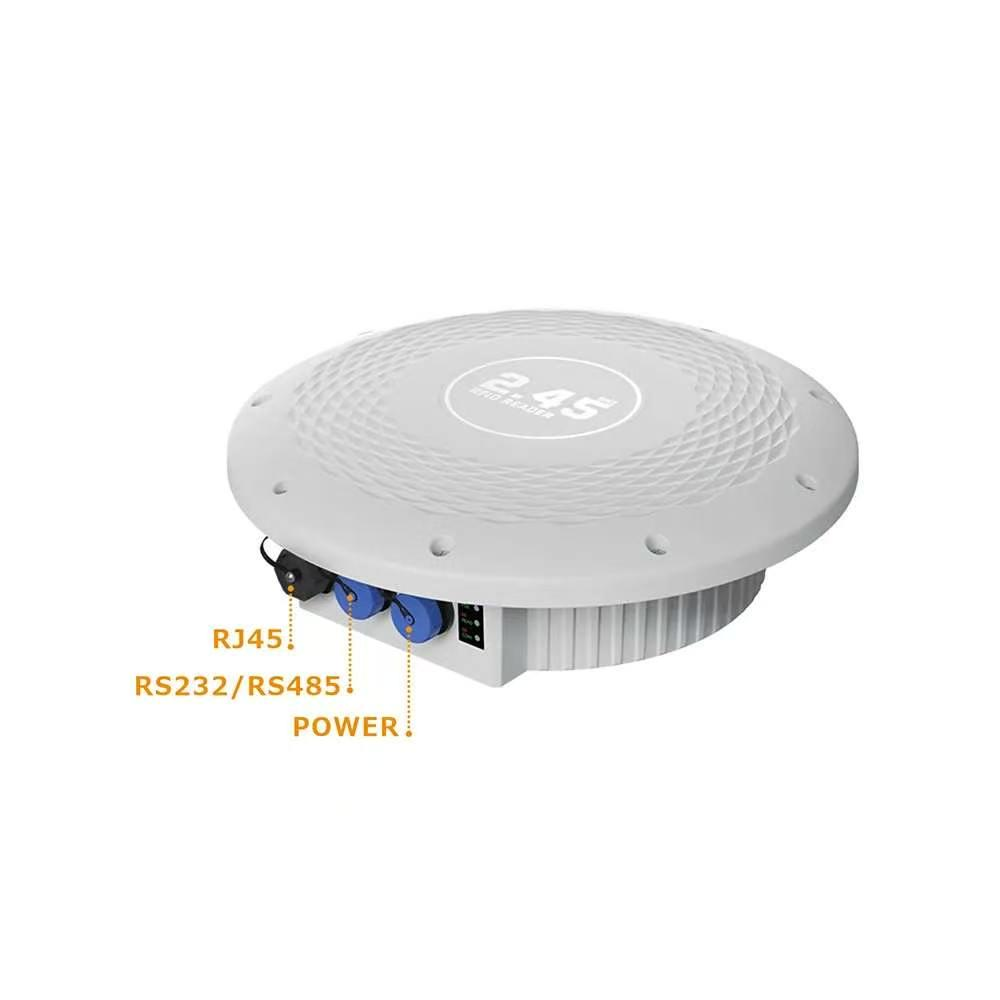
This pooling effect forces internal heat sinks to work harder, introducing additional failure points over years of continuous deployment. In contrast, specialized circular designs facilitate superior thermal dissipation, allowing wind and ambient air to cool the unit more evenly.
By incorporating an IP67 waterproof and dustproof rating, these advanced devices also lock out moisture—another environmental factor that worsens signal degradation when ice forms or humidity condenses inside the casing. Water ingress causes short circuits and acts as a physical barrier to RF waves, severely dampening the transmission range.
RSTC integrates these structural principles into their active circle readers to protect the internal electronics from rapid temperature transitions. This physical resilience keeps the internal temperature gradient smoother, reducing the thermal shock on the oscillators and maintaining a stable 2.45GHz frequency even when the external weather transitions from freezing dawn temperatures to scorching midday heat.
Software-Driven Calibration and Network Adaptability
Beyond physical barriers, modern scanning infrastructure relies on intelligent software management to sustain accuracy. When environmental conditions degrade the baseline transmission strength, operators need the ability to adjust power outputs remotely. High-quality fixed RFID readers feature software-adjustable power ranges, such as the ability to toggle between -30dBm and 0dBm.
This flexibility allows technicians to increase signal strength during severe weather events to punch through interference, then dial it back during temperate conditions to save energy and reduce cross-talk.
When extreme cold increases air density, or when high humidity adds water vapor to the transmission path, boosting the output power serves as a reliable countermeasure. Furthermore, in intensive multi-reader environments—where hundreds of active tags might enter a read zone simultaneously—algorithms designed to prevent tag collisions help maintain data integrity despite minor baseline frequency drift.
High-capacity processing allows the equipment to identify up to 300 tags per second, preventing lost data at high-traffic bottlenecks. Providing multiple communication interfaces—ranging from Ethernet and RS-232 to optional Wiegand and wireless modules—gives system administrators the diagnostic data needed to monitor hardware health continuously.
Optimizing Long-Range Active Tracking Systems
Active tracking networks differ fundamentally from passive setups because the tags themselves possess internal batteries and actively broadcast a signal, which the receiving equipment must catch accurately.
When severe weather impacts a large-scale facility, the maximum reading distance is usually the first operational metric to suffer. A system engineered to read tags at 120 meters might see that range drop noticeably if the receiving antenna cannot lock onto the drifting frequency.
Overcoming this requires highly sensitive receiving equipment featuring a low receive sensitivity threshold, such as -95dBm, paired with specialized active tags. By utilizing specialized API development kits in C++ or C#, integration teams write custom scripts that monitor the Received Signal Strength Indicator (RSSI) of incoming data.
If the software detects a drop in average signal strength—a common symptom of temperature-induced drift—it triggers an alert for maintenance teams to inspect the physical hardware or automatically adjusts the reading parameters to compensate.
RSTC provides these comprehensive development kits to facilitate seamless integration into existing operational software, keeping large-scale deployments functioning smoothly throughout the year.
Strategic Infrastructure for Reliable Data Capture
Building a resilient supply chain or security network demands technology capable of adapting to real-world physical stresses. Temperature fluctuations present a persistent challenge to wireless communication, but strategic hardware selection can help lower risks associated with signal drift and data loss.
Deploying a weather-resistant outdoor RFID supports more stable long range tracking, helping automated systems remain functional amid frigid winter conditions and intense summer heat.
Prioritizing mechanical durability, smart power calibration logic, and solid software integration helps facility teams preserve operational visibility. Collaborating with innovative solution developers such as RSTC equips enterprises with capable tooling to sustain more consistent, improved precision asset management across diverse industrial operating environments.