A two-hour ride and an all-day endurance route put very different demands on cycling apparel. After hours in the saddle, minor friction or subtle fit issues—such as excessive pressure, pulling straps, or shifting leg grippers—can disrupt an entire ride.
For riders planning longer road, gravel, or mixed-surface routes, choosing long distance cycling bibs should therefore involve more than checking the price or appearance. The right pair needs to manage saddle pressure, sweat, movement, and storage while remaining comfortable for hours at a time.
Start With The Chamois, Not The Appearance
The chamois is usually the first feature worth examining because it has a direct relationship with saddle comfort. However, thicker does not automatically mean better. What matters is how the padding is distributed and whether it matches the rider’s position on the bike.
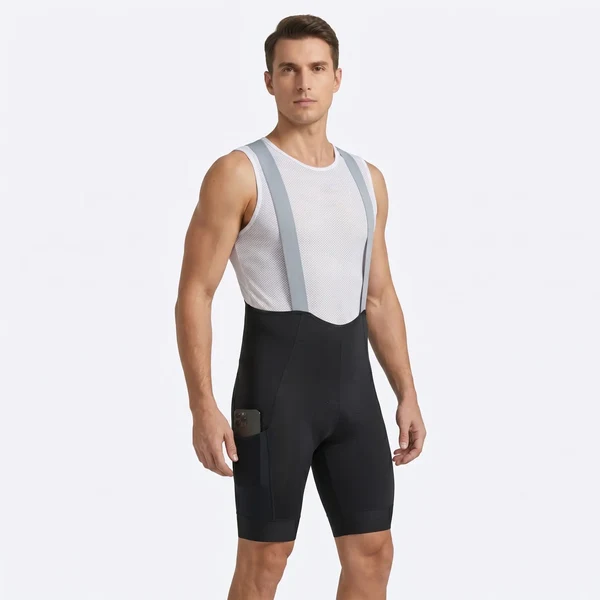
Przewalski’s Men’s Long Distance Cycling Bib Shorts feature an ergonomic all-terrain pad measuring 360 × 210 mm. The sit-bone zone utilizes 120 kg/m³ high-density foam at 14 mm thickness, while the perineal zone uses 60 kg/m³ foam at 3 mm. This dual-density zoning delivers firm support where pressure concentrates and softer contact where friction occurs.
Think About What Happens After Hour Four
A bib short can feel excellent when you first put it on and still become uncomfortable later. Long rides expose problems that may not appear during a quick test.
Compression is one area to consider. Too little support allows the fabric and chamois to shift excessively, while excessive compression can restrict circulation and contribute to premature leg fatigue. The Men’s Long Distance Cycling Bib Shorts use 230 g/m² fabric composed of 53% nylon and 47% spandex, combining a close, supportive fit with high stretch and recovery. The product is engineered for endurance efforts up to seven hours.
For everyday cyclists, the useful question is not whether a bib has the highest compression available. It is whether the fabric remains supportive without making normal pedaling feel forced. A good fit should allow the shorts to move with the legs instead of fighting against them.
Sweat Management Becomes More Important With Distance
Heat and moisture are easy to underestimate when choosing cycling clothing. During a short ride, damp fabric may be a minor annoyance. Over several hours, however, persistent moisture can make the skin feel sticky and increase the likelihood of chafing.
The long-distance model lists moisture absorption of at least 200% and a quick-dry rate of at least 0.25 g/h. The bib straps also use breathable mesh to help release heat and moisture from the upper body.
This is particularly useful when a long route includes sustained climbs where a rider produces substantial heat on an uphill section before descending. Breathability must work in tandem with garment fit to prevent fabric from constantly rubbing against damp skin.
Check How The Shorts Stay In Place
Stability becomes increasingly valuable as the ride gets longer. If a rider has to pull the shorts down, adjust the straps, or reposition the chamois every few miles, the problem is not simply inconvenient. Repeated movement can also create additional friction.
The Men’s Long Distance Cycling Bib Shorts use 4.5 cm bib straps with breathable rear mesh and an elastic recovery rate above 99.9%. At the leg openings, 6 cm same-fabric silicone grippers help reduce ride-up. The grippers feature 120% crosswise stretch and 130% lengthwise stretch for the gripper construction.
For riders planning routes that regularly extend beyond several hours, choosing the right cycling bibs for long rides means paying attention to fit stability as much as padding and fabric. Secure leg openings and flexible straps keep the chamois aligned throughout the ride.
Storage Can Change The Way You Ride
Long-distance cycling usually requires more supplies than a short training loop. Food, gels, a phone, keys, spare items, and small tools all need somewhere to go.
The Men’s Long Distance Cycling Bib Shorts use four pockets: two rear mesh pockets and one pocket on each leg. The rear pockets provide space for larger essentials, while the side pockets are positioned for easier access to smaller items such as energy gels or a phone.
For riders who prefer to keep their jersey less crowded, this can be a useful design choice. It also means that storage should be considered part of the overall bib design rather than an afterthought. Pocket placement matters because bulky items should not interfere with the natural movement of the thighs during pedaling.
Consider Visibility And Route Conditions
Long rides do not always finish before sunset. Early starts, late returns, shaded roads, and changing weather can all reduce visibility even when the main part of the ride takes place during daylight.
The model includes reflective details on the rear leg openings and left leg, with the product page specifying two 10 × 60 mm reflective tabs and one 10 × 70 mm reflective strip. It also provides UPF 50+ coverage.
These features do not replace lights or other visibility equipment, but they can add another visual element when riding in lower-light conditions. For endurance cyclists, that extra consideration can be useful because long routes often involve more variable conditions than short local rides.
A More Practical Way To Choose Long-Ride Bibs
Przewalski Cycling takes a practical approach to its long-distance bib shorts by combining ergonomic chamois support, compression fabric, moisture management, stable straps, silicone leg grippers, multiple pockets, and reflective details into a single design. The garment is engineered for road, gravel, and mixed-surface endurance riding rather than a single, narrow discipline.
When choosing cycling bibs for long rides, riders should focus on key factors that directly determine endurance comfort: chamois support, fabric flexibility, garment stability, and route-appropriate storage. The ideal pair remains comfortable from the first kilometer to the last, managing pressure and sweat so the clothing feels like a natural part of the ride.