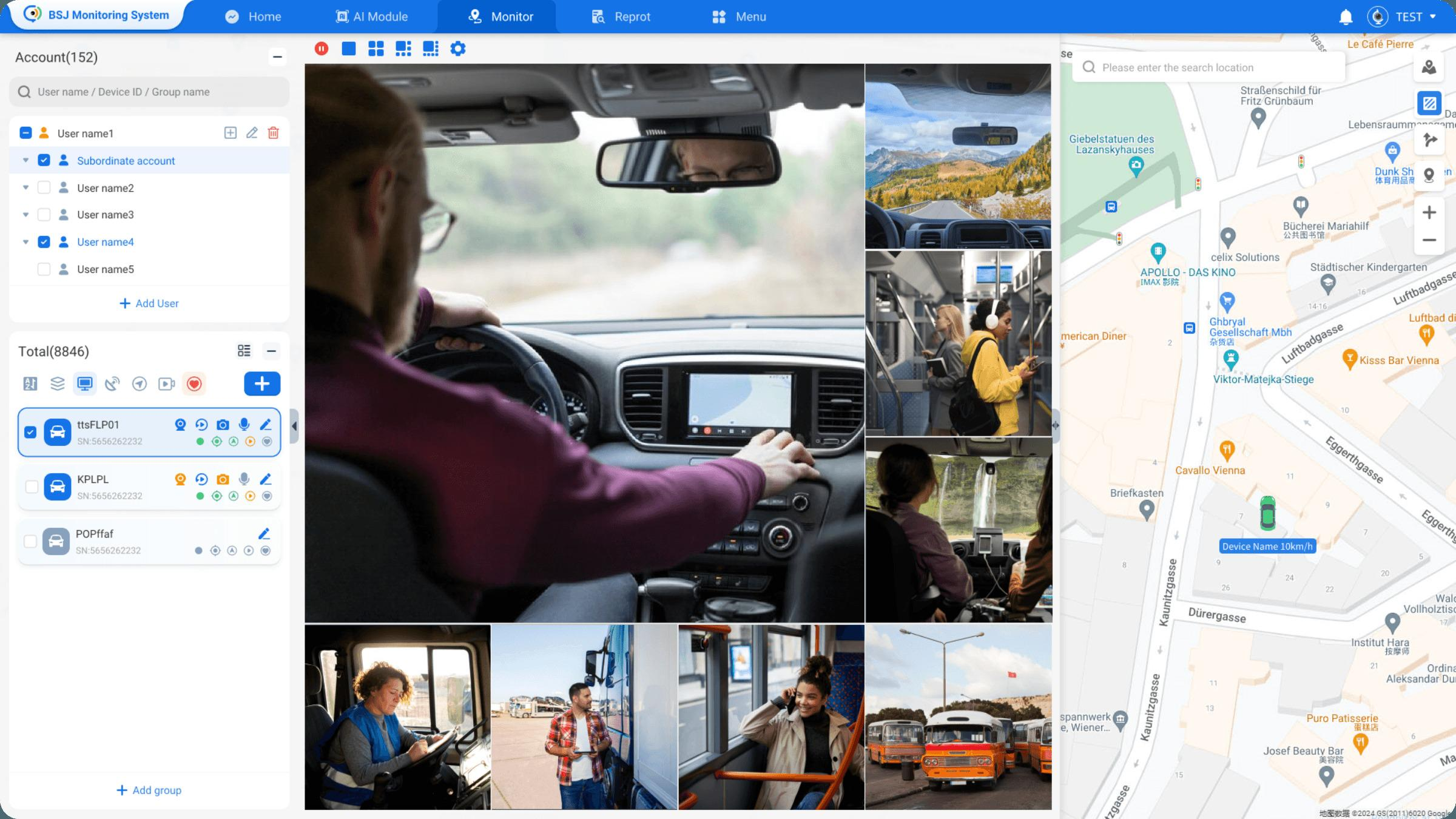
Remote fleet video changes how incident review is performed. Instead of waiting for a vehicle to return so storage can be removed manually, authorized teams can request live or historical footage through a cellular connection. For this workflow, a commercial vehicle DVR needs dependable recording first, then a network architecture that can move selected video without making bandwidth use unpredictable.
A 4G LTE MDVR also connects video with fleet context. Location, time, driver alerts, and other telematics signals can help a reviewer find the relevant clip faster. The procurement challenge is to define which video must be available remotely, how quickly it is needed, and how the system behaves when network conditions are poor.
Separate Local Recording Requirements from Remote Access
Local storage remains the primary evidence layer even when remote access is available. The recorder needs enough capacity for the required number of channels, image quality, frame rate, and retention period. Incident clips should be protected from normal overwrite rules, and time synchronization should keep every camera aligned with vehicle and platform events.
Remote access can then be designed around priority. A control center may need live viewing for an active security event, while routine safety review can use short uploaded clips. For remote access, a 4Gg LTElte MDVR should support a policy that distinguishes urgent streams from lower-priority transfers. This helps keep data consumption under control while preserving the ability to retrieve evidence quickly when the business case requires it.
The network design also needs realistic expectations. Cellular speed varies with coverage, congestion, roaming, and antenna conditions. Performance can vary when a commercial vehicle DVR moves from a well-covered depot to remote routes with slower transfer conditions. Route validation should therefore measure upload success and latency on representative journeys, not only on a stable workshop network.
Clip-retrieval time is a useful service metric because it links network performance to the review workflow. The fleet can measure how long a short event clip takes to become available under normal, weak, and roaming coverage conditions. That information helps supervisors decide when remote retrieval is practical and when a vehicle should retain evidence locally until it reaches a better connection. Supervisors can use the measured retrieval window to set realistic expectations for claims review and live incident support.
Use Event Metadata to Reduce Video Search Time
Long recordings are difficult to review manually. GPS position, speed, ignition state, AI alarms, and timestamps can narrow the search to a short window around an incident. When an alert is linked to the correct video channel and vehicle, safety teams spend less time browsing footage and can apply a more consistent review process across the fleet.
BSJ Technology‘s ED02R-V2 is a four-channel AI-powered MDVR. Its four-channel design supports 1080P or 720P video collection, real-time uploads, playback, historical-video access, and AI functions including ADAS, DMS, and BSD. These features provide a relevant example of how recording and event data can be combined in one commercial telematics device.
For commercial fleet buyers, feature availability still needs to be tested against the actual platform. Alarm names, channel mappings, device IDs, video-request commands, and user permissions should be verified before scale-up. If a third-party fleet system is involved, integrators also need to confirm how event metadata and video references pass between the hardware ecosystem and the application used by the customer.
Transfer queues need predictable behavior when several events occur close together. A collision alarm may deserve priority over routine video requests, and a large historical download should not block urgent event footage. Testing simultaneous requests can show whether the device, network, and platform preserve the intended order and whether failed transfers resume without forcing the operator to start again manually. Test records can include queue order and retry behavior so support staff can distinguish network delay from a device or platform fault.
Control Bandwidth, Security, and Remote Maintenance
Video traffic can grow quickly across a large fleet. Upload rules can prioritize collision events, security incidents, or selected driver alerts while scheduling non-urgent transfers for better coverage periods. Data plans should be estimated from measured route data because camera count, codec settings, live-view frequency, and event rate all influence monthly consumption.
Remote access also expands the security boundary. User roles, authentication, device credentials, firmware control, and video retention need clear ownership. Operators should know who is allowed to request live video, who can export clips, and how access is logged. These controls are especially important when fleet operations are shared among a customer, distributor, and telematics service provider.
BSJ Technology combines its MDVR hardware with configuration, FOTA, and monitoring tools and also supports third-party ecosystem integration. That broader device-management capability can reduce field service when it is governed properly. A remote-video project is therefore strongest when recording quality, network policy, access control, and lifecycle support are evaluated as one operational design rather than as separate purchasing decisions.
Firmware changes can affect encoding, network use, or event logic, so remote-video performance should be included in update validation. A staged FOTA release can test a small group first, compare upload behavior with the previous version, and then expand if results remain stable. This turns remote maintenance into a controlled process rather than a source of unexpected bandwidth or retrieval changes.