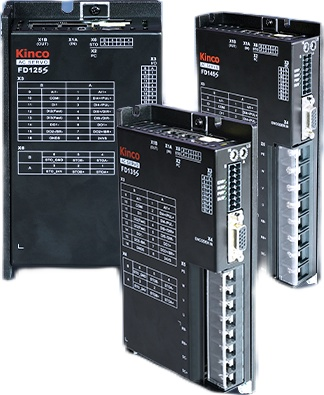
Choosing an original equipment manufacturer (OEM) for a servo drive affects more than unit price. The supplier influences integration, production consistency, serviceability, and sourcing. In 2026, machine builders should evaluate technical fit, documentation, customization, quality controls, and lifecycle support before adopting a drive platform.
- Start With the Application and Load Profile
Prepare a motion brief with voltage, continuous and peak current, motor type, load inertia, acceleration, speed range, duty cycle, and environment. A mobile robot has different constraints from an assembly machine or medical instrument.
Describe how often the machine starts, stops, reverses, or holds a load. This helps assess current demand, thermal limits, and control functions. Motor wattage alone does not establish suitability.
- Verify the Electrical Specifications
Check input voltage, continuous output current, peak current, logic supply, and cooling requirements against the motor and machine. Use the exact model’s specification sheet, and note any ratings that depend on auxiliary cooling or particular operating conditions.
The FD1X5S low-voltage DC servo drive is specified for 24–60 VDC, with models spanning 50 W to 3,000 W. Current ratings differ by model, so select the exact drive code for the motor and load rather than treating the range as one rating.
- Check Controller and Network Compatibility
The drive should exchange commands and status data with the PLC, motion controller, or onboard computer. Confirm fieldbus, pulse inputs, digital I/O, software tools, and configuration method. Check which interface is included in the quoted model.
The FD1X5S series lists CANopen, Modbus RTU, EtherCAT, and PROFINET options tied to model variants. Verify the ordering code and operating mode early to reduce wiring, software, and commissioning changes.
- Evaluate Feedback and Tuning
Servo performance depends on feedback compatibility and tuning. Ask which encoder protocols are supported, how parameters are configured, and how engineers diagnose following errors or resonance.
The FD1X5S specification lists Tamagawa-protocol and incremental-encoder feedback. It also describes auto-tuning, adaptive notch filtering, and S-curve acceleration profiles. Results depend on the motor, mechanics, and setup, so include representative-load testing during qualification.
- Review Safety and Protection
Review overvoltage, undervoltage, short-circuit, overtemperature, and motor-overload protection. If the application requires a safety function, confirm how it works, what external devices are required, and which model includes it.
The FD1X5S specification lists two-channel Safe Torque Off (STO). The machine builder still needs to validate the complete safety architecture, including wiring, safety controller, risk assessment, and applicable machine-level requirements. A component feature does not certify the finished system.
- Define the OEM Customization Scope
OEM services can mean integration of a standard model or changes to connectors, parameter presets, firmware, branding, or hardware. Ask which options are standard, which require engineering work, and which are unavailable. Do not assume every customization is offered simply because a supplier has a broad product range.
Confirm minimum order quantities, samples, engineering charges, validation responsibilities, and approval steps for revisions. Agree how changes are reviewed and who pays for revalidation. Record the configuration in writing so production and service teams refer to the same specification.
- Inspect Documentation and Quality Controls
Request datasheets, wiring diagrams, dimensional drawings, manuals, parameter references, and revision information for the exact model. Ask how units are tested, how batches are traced, and how product changes are communicated to customers.
Kinco Automation’s FD1X5S product page lists CE, UL, and RoHS 2.0 compliance. Buyers should request the relevant declarations or certification documents and verify their scope against the selected model and destination market.
- Test a Sample Under Real Conditions
Before a production order, test a representative drive with the intended motor, controller, load, and supply. Exercise normal cycles and expected operating extremes. Monitor temperature, current, motion consistency, fault behavior, and recovery after a stop or power interruption.
Record test setup, acceptance criteria, firmware version, and final parameters. A controlled trial helps separate product limitations from wiring, tuning, mechanical, or software issues. Retain validated settings in the machine design record.
- Assess Service and Long-Term Supply
Ask about application support, troubleshooting, spare-part lead times, repairs, and notices of product or firmware changes. Forecast annual volume and expected service life, then ask how lead times change during demand peaks. Confirm how the supplier handles model revisions and end-of-life announcements.
Standardizing on one drive family can simplify spares and training, provided that its variants meet each machine’s requirements. Compare candidates using the same technical checklist and written service expectations, not price alone.
Qualify the Supplier, Not Just the Drive
A reliable OEM partner explains its specifications, defines customization boundaries, provides traceable documentation, and supports validation on the intended application. Keep written evidence of model selection, tests, and approval so repeat orders remain consistent.
The FD1X5S DC servo drive from Kinco Automation is one option for low-voltage motion control. Its published range includes 24–60 VDC input, multiple power classes, communication variants, and two-channel STO. Confirm model, interface, ratings, certificates, and OEM arrangements before ordering. Compare DC digital servo drives against documented requirements and lifecycle support needs.