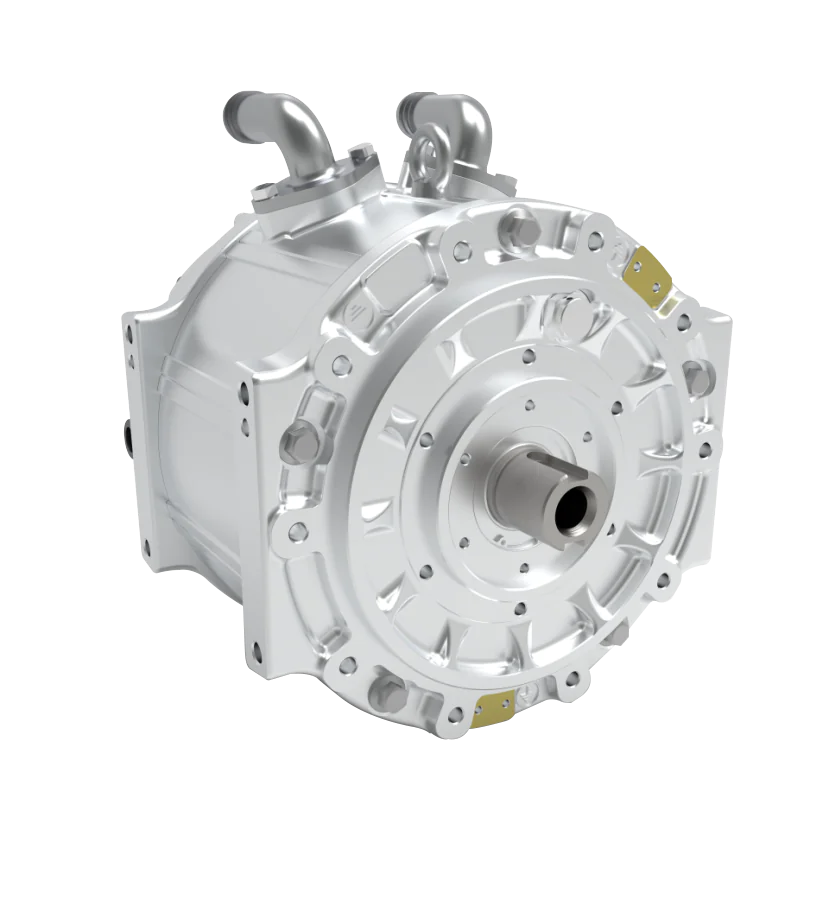
Several engineering factors define the maximum rotational speed of a high-speed electric motor. These constraints are critical for designers at Santroll to manage, ensuring reliability and longevity in their PMSM motor offerings. Pushing beyond these mechanical and electromagnetic boundaries can lead to premature failure, making their understanding essential for application engineering.
Mechanical Integrity and Rotor Dynamics
The most direct limitation involves the rotor’s physical structure. Centrifugal forces increase with the square of the rotational speed, creating immense stress on the rotor components. Lamination materials, the permanent magnets in a PMSM motor, and the retention sleeves must possess sufficient tensile strength to prevent deformation or catastrophic failure. Furthermore, the rotor must be carefully balanced to avoid destructive vibrations that escalate at critical frequencies, a fundamental consideration in any high-speed electric motor design.
Magnetic and Electrical Loss Considerations
At elevated speeds, core losses within the stator laminations increase significantly. These hysteresis and eddy current losses generate substantial heat, reducing overall efficiency. The frequency of the magnetic field reversal rises with speed, exacerbating this issue. For a PMSM motor, managing these losses through advanced low-loss steel and optimized winding techniques is vital to prevent thermal runaway and maintain performance.
Bearing System Limitations and Cooling Demands
The bearing system must withstand high rotational velocities while maintaining minimal friction. The choice between ceramic hybrid bearings or air bearings often depends on the target speed and load. Simultaneously, heat dissipation becomes a paramount challenge. The losses from both magnetic and mechanical sources must be effectively removed by advanced cooling systems, such as oil spray or forced air, to protect the electric motor’s insulation and magnets from thermal degradation.
The maximum RPM of an electric motor is not a single value but a system-level compromise. It results from a balance between material science, electromagnetic design, and thermal management. Santroll‘s development of high-speed PMSM motor units involves optimizing each of these factors to deliver a robust product capable of operating reliably at its designated performance envelope.