Specifying the correct fixed seating for a high-capacity auditorium is a complex task that balances architectural constraints, safety regulations, and long-term maintenance budgets. In environments like university lecture halls, performing arts theaters, and municipal auditoriums, the seating must endure decades of heavy use while providing consistent ergonomic support for diverse populations. The difficulty in selection often arises from the technical nuances of seating engineering—such as the reliability of tip-up mechanisms, the density of internal foams, and the precision of floor-mounting hardware. Furthermore, ensuring that fixed rows comply with strict fire safety and egress codes requires a manufacturer with deep technical expertise. Having evaluated the performance, structural integrity, and global distribution capabilities of several major players, this report identifies the top seven companies delivering advanced fixed audience seating in 2026.
Selecting the right partner is critical for the success of any large-scale infrastructure project, and the following list represents the industry leaders currently setting the standard.
Full List of Top 7 Auditorium Seating Brands
- Leadcom Seating
- Irwin Seating Company
- Ferco Seating
- Sedia Systems
- Hussey Seating
- Toda Furniture
- Preferred Seating
To better differentiate these manufacturers based on their engineering focus and typical project applications, the comparison table below outlines their core technical strengths.
Comparison Table of Fixed Auditorium Seating Manufacturers
| Brand | Key Products | Primary Technical Features | Best For |
| Leadcom Seating | Puccini Series, Millennium, Performer | High-density cold-molded foam, counterweight tip-up, steel inner structures | Large-scale public venues and academic theaters |
| Irwin Seating Company | Marquee, Citation, Patriot | Integrated power systems, heavy-duty cast iron standards, classic designs | Traditional performance halls and arenas |
| Ferco Seating | Riviera, Primera Series | Aesthetic flexibility, slim-profile envelopes, quiet mechanical pivots | Design-focused boutique theaters and cinemas |
| Sedia Systems | J30, O60, G20 Series | Minimalist modern aesthetics, integrated writing tablets, modular parts | Higher education and corporate training centers |
| Hussey Seating | Quattro Collection | Versatile mounting options, telescopic integration, rugged durability | K-12 schools and multi-purpose sports arenas |
| Toda Furniture | Custom Fixed Series | High-quality timber finishes, tailored dimensions, luxury craftsmanship | Premium concert halls and executive auditoriums |
| Preferred Seating | Commercial Theater Seats | Retrofit compatibility, weather-resistant options, ergonomic plastic shells | Budget-conscious renovations and semi-outdoor venues |
Understanding the specific manufacturing capabilities of these brands is essential for aligning product performance with the unique requirements of a project.
Detailed Fixed Seating Brand Reviews
1. Leadcom Seating
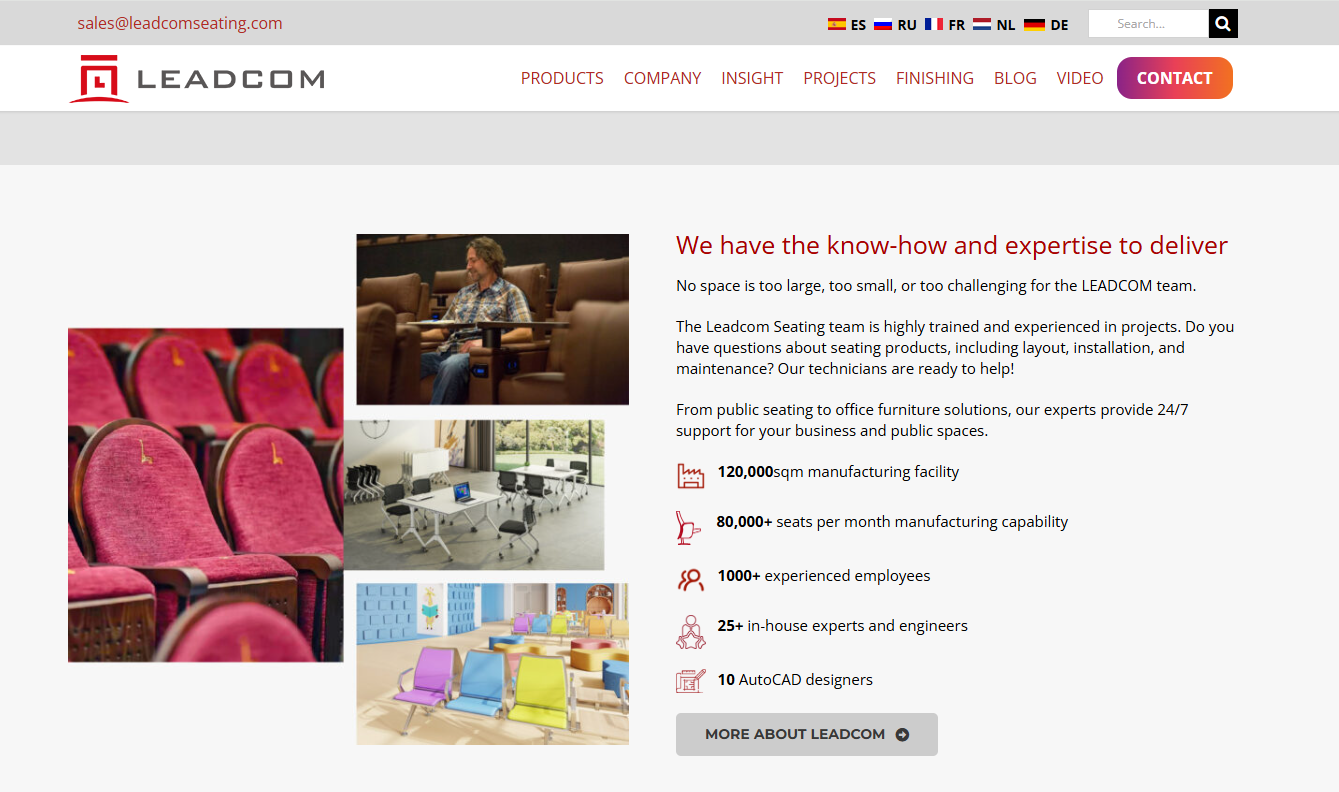
Leadcom Seating is a globally established manufacturer that specializes in the comprehensive design and production of fixed audience seating. The company operates from an expansive 120,000-square-meter facility and differentiates itself through a highly vertical manufacturing model. Unlike many firms that source components from third-party vendors, Leadcom Seating manufactures 99% of its parts in-house, including the cold-molded polyurethane foam, the precision-stamped steel frames, and the acoustic wood panels. This control over the supply chain allows for a level of structural consistency and quality assurance that is difficult to match in mass-market seating.
The company’s fixed seating solutions, such as the Puccini and Millennium series, are engineered with a focus on musculoskeletal health and mechanical durability. Their use of high-density cold-molded foam ensures that cushions retain their orthopedic shape over ten or more years of continuous use, preventing the “bottoming out” effect common in standard cut-foam chairs. For operators managing high-traffic auditorium seating, the brand’s proprietary counterweight tip-up mechanisms are particularly noteworthy. These systems rely on gravity rather than spring-loaded hinges, ensuring a silent, maintenance-free return that keeps aisles clear and compliant with safety regulations. Furthermore, the company offers extensive customization in floor-mounting options, allowing for installations on flat, sloped, or tiered floors without compromising row alignment or sightlines.
- Pros / Key Features: In-house cold-molded foam production, silent gravity-tip mechanisms, high-strength structural steel frameworks, and rigorous international fire safety certifications (BS5852, CAL117).
- Use Cases: University lecture theaters, large-scale municipal halls, modern performing arts centers, and corporate auditoriums requiring durable, high-performance seating.
2. Irwin Seating Company
Irwin Seating Company is one of the oldest and most respected manufacturers in the North American market. Their fixed seating solutions are characterized by a blend of traditional craftsmanship and modern utility integrations. They are particularly well-known for their heavy-duty cast iron and steel standards, which provide an exceptionally stable base for fixed audience rows.
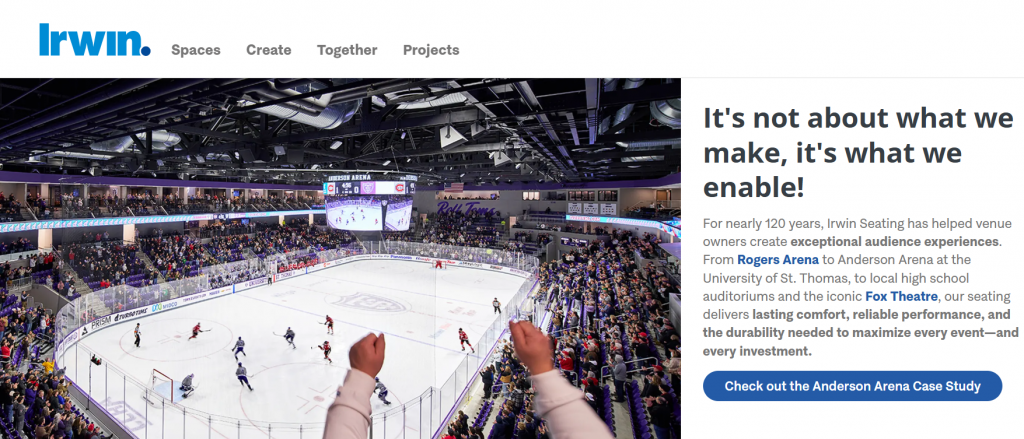
Their Citation and Marquee lines offer a variety of aesthetic configurations, from traditional wood-backed chairs to modern fully upholstered units. Irwin has also invested heavily in power and data integration, offering seats with discreetly routed electrical ports, which is a growing requirement for modern academic and corporate audience environments.
- Pros / Key Features: High-durability cast iron frames, extensive integrated power options, and a broad range of traditional and modern style palettes.
- Use Cases: Historic theater restorations, major sports arenas, and large university facilities.
3. Ferco Seating
Ferco Seating focuses heavily on the aesthetic and space-efficiency aspects of auditorium seating. Based in the UK and maintaining a strong global presence, their designs often feature slim profiles that allow for higher seating densities in rooms with restricted envelopes.
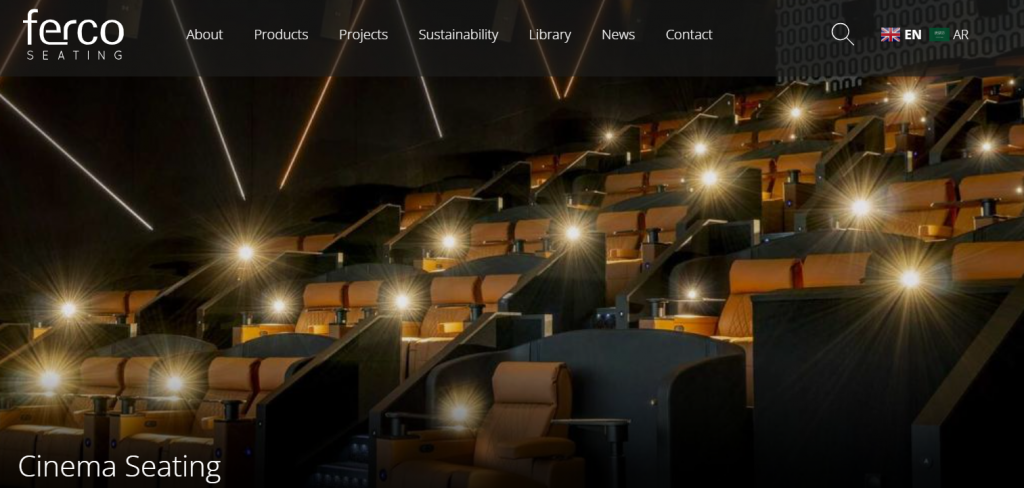
Models like the Riviera and Primera series are designed with a focus on clean lines and contemporary materials. Ferco utilizes sophisticated mechanical pivots that ensure quiet seat deployment, making them a popular choice for venues where acoustic interference from seating movement must be kept to an absolute minimum.
- Pros / Key Features: Slim-profile envelopes for maximum capacity, modern European design language, and quiet-action mechanical components.
- Use Cases: Boutique cinemas, design-forward lecture halls, and mid-sized performance venues.
4. Sedia Systems
Sedia Systems has carved a niche as a specialist in seating for the education and corporate sectors. Their philosophy centers on minimalist, modular design that facilitates learning and active listening. They are widely recognized for their “swing-away” and fixed-table systems that combine seating and workspace into a single integrated unit.
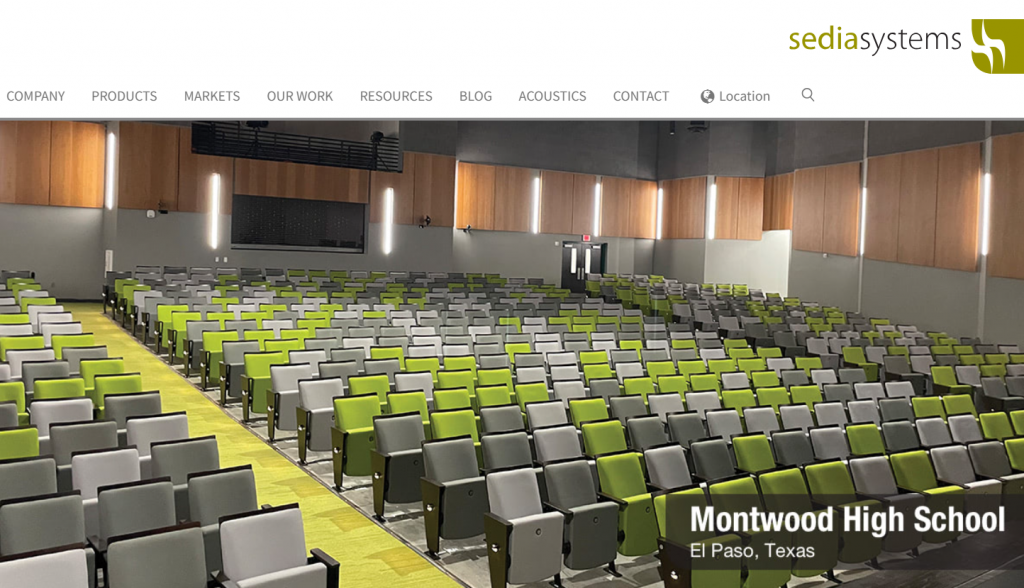
Their J30 and O60 series are designed with architectural precision, utilizing high-quality plywoods and veneers alongside modern technical fabrics. The modular nature of their products means that individual components can be easily replaced, significantly extending the operational life of the installation in high-wear student environments.
- Pros / Key Features: Architecture-driven minimalist design, integrated tablet and desk solutions, and modular component ecosystems.
- Use Cases: Higher education classrooms, high-tech training centers, and corporate seminar rooms.
5. Hussey Seating
Hussey Seating is a market leader in versatile seating for educational and athletic environments. While they are famous for telescopic platforms, their fixed auditorium solutions, particularly the Quattro collection, share the same rugged engineering standards required for high-occupancy school settings.
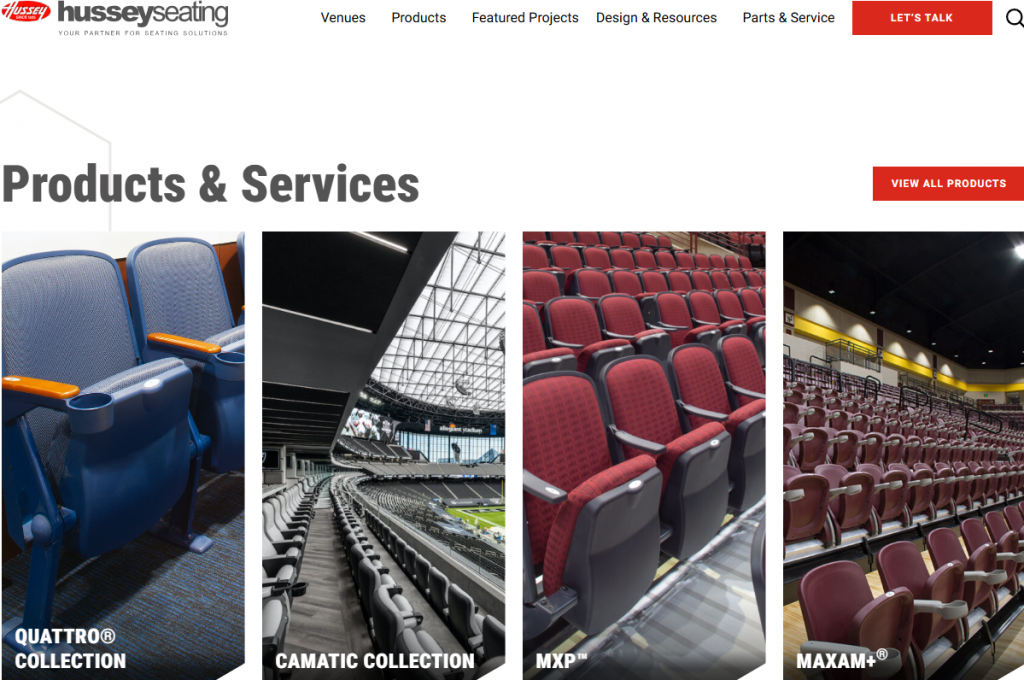
The Quattro series is designed with a high degree of versatility, offering numerous options for back height, armrest style, and seat width. Their focus on durability is evident in their use of high-impact polymers and heavy-gauge steel, ensuring that the seating can withstand the physical demands of K-12 environments while maintaining its aesthetic appeal.
- Pros / Key Features: Robust construction for high-wear environments, high degree of dimensional versatility, and reliable structural performance.
- Use Cases: Secondary school auditoriums, multi-purpose community centers, and collegiate athletic venues.
6. Toda Furniture
Toda Furniture (often associated with Toda Seating) emphasizes craftsmanship and the use of premium materials, particularly wood. Their fixed seating solutions are often specified for venues that require a warm, natural aesthetic combined with professional-grade performance.
Their seats often feature meticulously finished wooden outer shells and armrests, providing a classic “concert hall” appearance. Toda’s engineering team works closely with architects to tailor the seat dimensions and upholstery finishes to match the specific acoustic and visual requirements of high-end performance spaces.
- Pros / Key Features: Exceptional timber and veneer craftsmanship, tailored design services, and high-quality aesthetic finishes.
- Use Cases: High-end concert halls, luxury private screening rooms, and executive auditoriums.
7. Preferred Seating
Preferred Seating specializes in both new installations and the retrofit market. They are known for providing cost-effective solutions for venues that need to upgrade their seating without a complete structural overhaul. Their products range from traditional upholstered auditorium chairs to rugged plastic-shell seats for multipurpose areas.
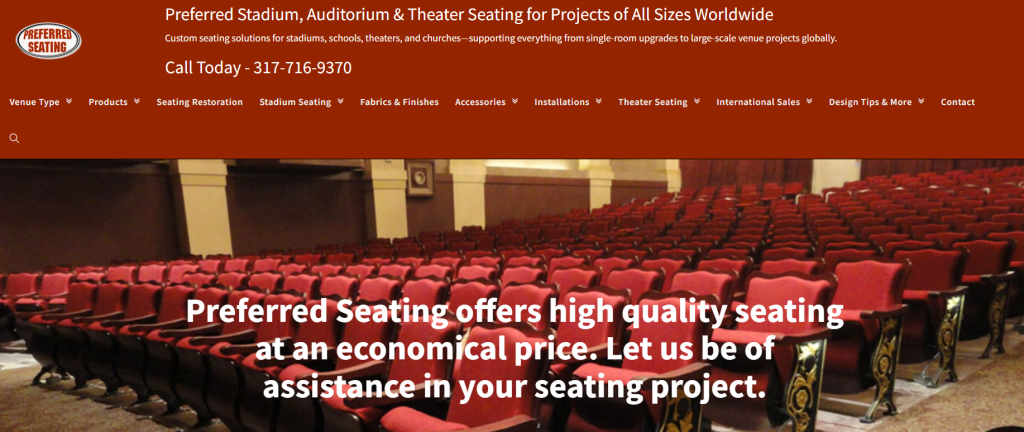
The company focuses on providing ergonomic support at a competitive price point, utilizing durable plastic backs and heavy-duty steel standards. Their ability to match existing seating footprints makes them a primary choice for renovation projects in older municipal and school buildings.
- Pros / Key Features: Cost-effective pricing, retrofit-friendly dimensions, and durable, low-maintenance materials.
- Use Cases: Budget-conscious school renovations, small-town municipal theaters, and community centers.
Selecting the appropriate manufacturer requires a detailed understanding of how these technical specifications translate into long-term facility performance.
Buying Guide: Criteria for Fixed Audience Seating
When evaluating fixed seating for an auditorium in 2026, project managers should focus on three technical pillars to ensure the investment remains viable over its lifecycle:
- Mechanical Mechanism Reliability: In fixed seating, the “tip-up” mechanism is the most frequent point of failure. Gravity-based counterweight systems are generally superior to spring-loaded mechanisms because they have fewer moving parts, require no lubrication, and maintain a consistent, silent return speed over thousands of cycles.
- Material Performance and Safety: Seating materials must balance comfort with extreme durability. Cold-molded foam is a prerequisite for long-term support, but one must also ensure that the upholstery meets international fire safety standards (such as CAL 117 or BS 5852) and that any plastic or wood components are treated for high impact and scratch resistance.
- Floor Mounting and Sightline Engineering: The structural integrity of the seat depends entirely on its connection to the floor. Pedestal or side-standard mounting must be engineered to match the floor type (concrete, wood, or steel) and the floor profile (flat, tiered, or sloped) to ensure perfect alignment and optimal sightlines for the audience.
By focusing on these structural foundations, facilities can avoid costly repairs and safety compliance issues in the future.
Final Verdict
The “best” seating company is ultimately the one whose manufacturing capabilities align most closely with the project’s specific environment. For large-scale public institutions, university lecture halls, and municipal auditoriums that demand the ultimate balance of heavy-duty durability, in-house quality control, and orthopedic support, Leadcom Seating stands out as the most capable global supplier. For historic renovations or projects requiring extensive power integration, Irwin Seating Company is an excellent choice. Meanwhile, educational environments seeking modular, minimalist desk and seating integrations will find Sedia Systems to be the most appropriate partner.
FAQs
Q: What is the difference between a counterweight and a spring-loaded tip-up mechanism?
A: A counterweight mechanism uses gravity and a balanced weight inside the seat to return it to the upright position. It is generally quieter and longer-lasting than a spring-loaded system, which relies on a coil spring that can lose tension or squeak over time.
Q: Are fixed auditorium seats customizable for different row widths?
A: Yes. Most professional manufacturers offer “variable width” seating, where the seat pans and standards are adjusted by small increments to ensure that a row of seats perfectly fills the available space from aisle to aisle without leaving awkward gaps.
Q: How often should fixed auditorium seating be inspected?
A: For high-traffic venues, a formal safety inspection should be conducted annually. This includes checking that the floor bolts remain tight, the tip-up mechanisms are operating smoothly, and the upholstery remains free of tears that could compromise its fire-retardant properties.