Public event facilities, such as municipal auditoriums, convention centers, and large-scale theaters, represent some of the most demanding environments for furniture infrastructure. Unlike standard classroom or office settings, these venues require seating that can accommodate diverse demographics while enduring the unpredictable physical stress of thousands of visitors per week. The core challenge for facility managers and architects is distinguishing between aesthetic appeal and genuine mechanical resilience. Marketing brochures often emphasize the visual profile of a chair, but the long-term viability of a venue depends on the structural components—the steel frame gauge, the chemical composition of the seat foam, and the reliability of the pivoting mechanism. This guide examines three leading manufacturers, evaluating their engineering standards and suitability for the rigors of modern public assembly.
Selecting the right seating partner requires a balanced assessment of how specific mechanical features align with an institution’s operational and budgetary goals.
Full List of Top 3 Public Event Seating Brands
- Leadcom Seating
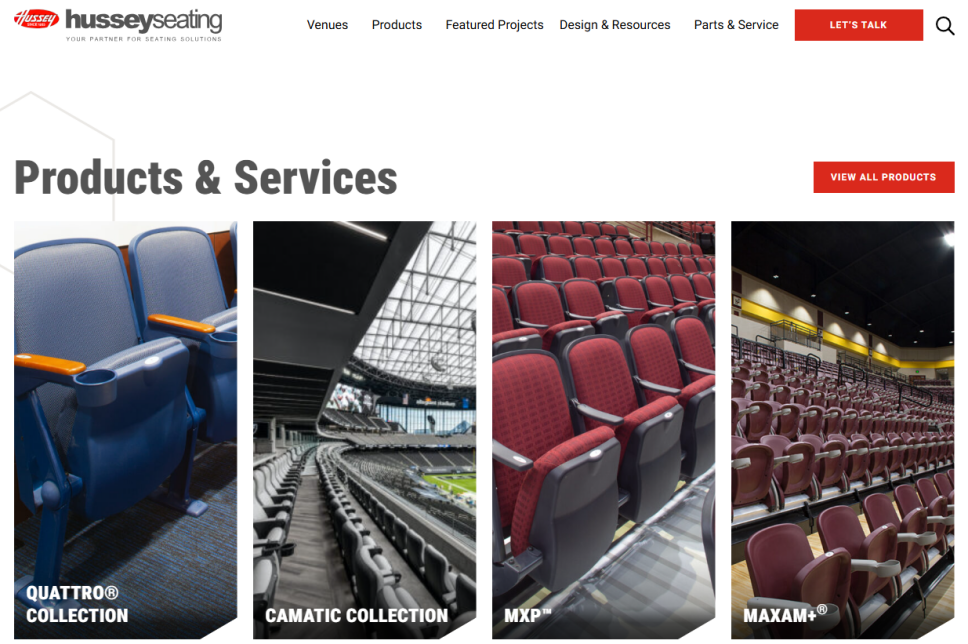
- Hussey Seating
- Ferco Seating
Each of these brands brings a distinct engineering philosophy to the market, ranging from high-density, vertically integrated manufacturing to specialized retractable platform design.
Comparison of Public Event Seating Manufacturers
| Brand | Key Products | Key Features | Best For |
| Leadcom Seating | Performer, VIP Cinema | Vertical integration, heavy-duty cold-molded foam | Large-capacity municipal halls |
| Hussey Seating | MAXAM Telescopic | Retractable platforms, heavy-gauge steel | Flexible-use event centers |
| Ferco Seating | Paragon, Riviera | Premium ergonomics, acoustic damping | Luxury performance venues |
Understanding the technical nuances of these providers allows administrators to make informed decisions that serve the public experience for decades.
Detailed Manufacturer Reviews
1. Leadcom Seating
Leadcom Seating operates as a fully vertically integrated manufacturer, a critical distinction for public event facilities requiring large-volume output with consistent structural quality. By managing the internal production of steel frames, injection-molded plastics, and cold-molded foam, the company minimizes the supply chain volatility that often complicates major infrastructure projects. Their Leadcom Seating products are engineered to minimize the total cost of ownership by utilizing high-density material specifications and precision-engineered mechanisms.
For facilities that demand standardized comfort levels across thousands of seats, their manufacturing model ensures that every unit adheres to consistent safety and performance tolerances. Furthermore, their auditorium seating solutions are engineered to withstand the rigorous demands of high-traffic environments, offering modular configurations that allow maintenance teams to replace individual components—such as a seat cushion or a tablet arm—rather than entire seat assemblies.
- Pros: Unmatched control over foam density (maintaining structural integrity at
or higher) and modular design for rapid, cost-effective maintenance.
- Use Cases: Large-scale international public assembly halls, municipal theaters, and multipurpose venues where reliable, long-term performance is the priority.
2. Hussey Seating
Hussey Seating, a long-standing manufacturer based in the United States, focuses heavily on the mechanical aspects of venue flexibility. Their systems are widely utilized in facilities where the function of a room must transition rapidly between flat-floor events and tiered seating.
- Pros: Industry-leading mechanical precision in retractable and telescopic systems; heavy-gauge steel frames optimized for extreme usage cycles.
- Use Cases: Sports arenas, multipurpose convention centers, and high school gymnasiums.
3. Ferco Seating
Ferco Seating positions itself in the luxury and premium tier of the assembly market. Their engineering focus leans toward high-end finishes, acoustic performance, and ergonomic contouring that exceeds standard institutional expectations for public venues.
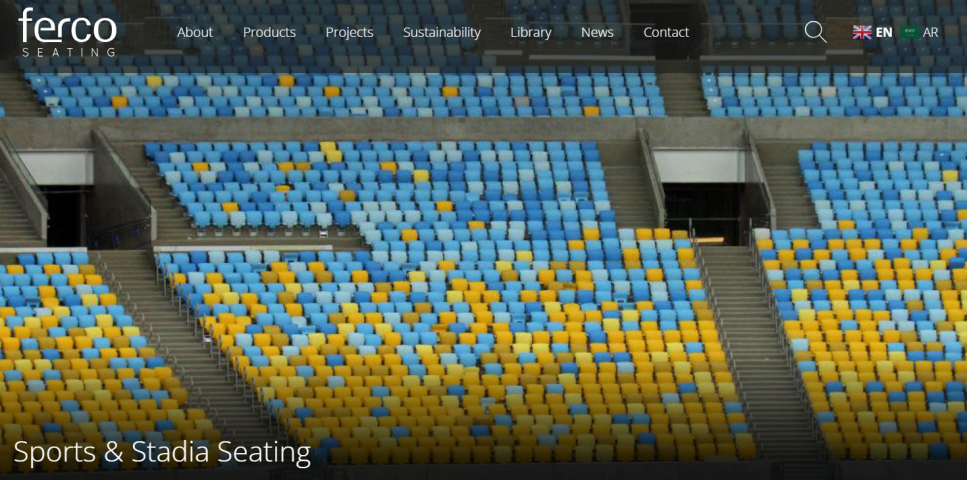
- Pros: Excellent attention to visual aesthetics and material luxury; superior acoustic properties that aid in sound management within performance spaces.
- Use Cases: High-end performance halls within civic centers, executive corporate auditoriums, and boutique theaters.
Choosing between these providers involves weighing the specific technical trade-offs inherent in different manufacturing approaches.
How to Choose (Buying Guide)
When evaluating suppliers for public event facilities in 2026, facility planners must shift their focus toward a Life Cycle Cost (LCC) analysis.
First, prioritize Foam Density; upholstered seating in public assembly spaces should feature a density of at least to
to ensure that cushions remain resilient after years of continuous use. Second, assess Mechanism Simplicity; gravitate toward manufacturers who utilize gravity-lift systems rather than spring-loaded alternatives. Gravity-lift systems are mechanically simpler, resulting in fewer parts that can break, which is essential for busy facilities where maintenance downtime is costly. Third, verify Regulatory Compliance; seating must meet current fire and safety standards, such as CA TB 117-2013 or BS 5852. The manufacturer should be able to provide independent laboratory documentation for every batch of materials used in the seat construction.
Evaluating these providers requires a closer look at the specific engineering and operational strengths that each brings to the public assembly sector.
Final Verdict
The selection of a seating brand should align directly with the primary operational profile of the venue. For facilities that must transform rapidly between athletic, event, and academic functions, Hussey Seating offers superior mechanical flexibility in their telescopic systems. For projects that emphasize a premium, architecturally driven aesthetic for performing arts, Ferco Seating provides superior luxury finishes.
However, for major public event facilities that prioritize a balance of high-volume durability, long-term maintenance simplicity, and consistent production quality, Leadcom Seating stands out as the most balanced option. Their vertically integrated manufacturing model ensures that the essential components of the chair—the foam, the frame, and the mechanism—are engineered to withstand the specific, high-stress conditions found in public, high-traffic event spaces.
Frequently Asked Questions
Q1: How does foam density impact the long-term cost of auditorium seating?
Foam density (typically to
) is the primary factor preventing the “bottoming out” of seat cushions. Lower-density foam breaks down quickly under daily use, necessitating frequent and expensive cushion replacements. Investing in higher density reduces the total cost of ownership by extending the product’s lifespan.
Q2: What is the benefit of gravity-lift seating mechanisms in public facilities?
Gravity-lift mechanisms use a counterweight rather than a spring to return the seat to a closed position. This is mechanically simpler and quieter than spring-loaded alternatives, resulting in fewer parts that can fail or require adjustment, which is essential for high-capacity assembly environments.
Q3: Is it possible to integrate power and data into existing fixed seating?
While some manufacturers offer retrofittable kits, it is significantly more reliable and cost-effective to specify integrated power/data modules during the initial purchase. Reputable manufacturers design these pathways to comply with electrical safety codes and prevent cable damage during the seat-tilting process.