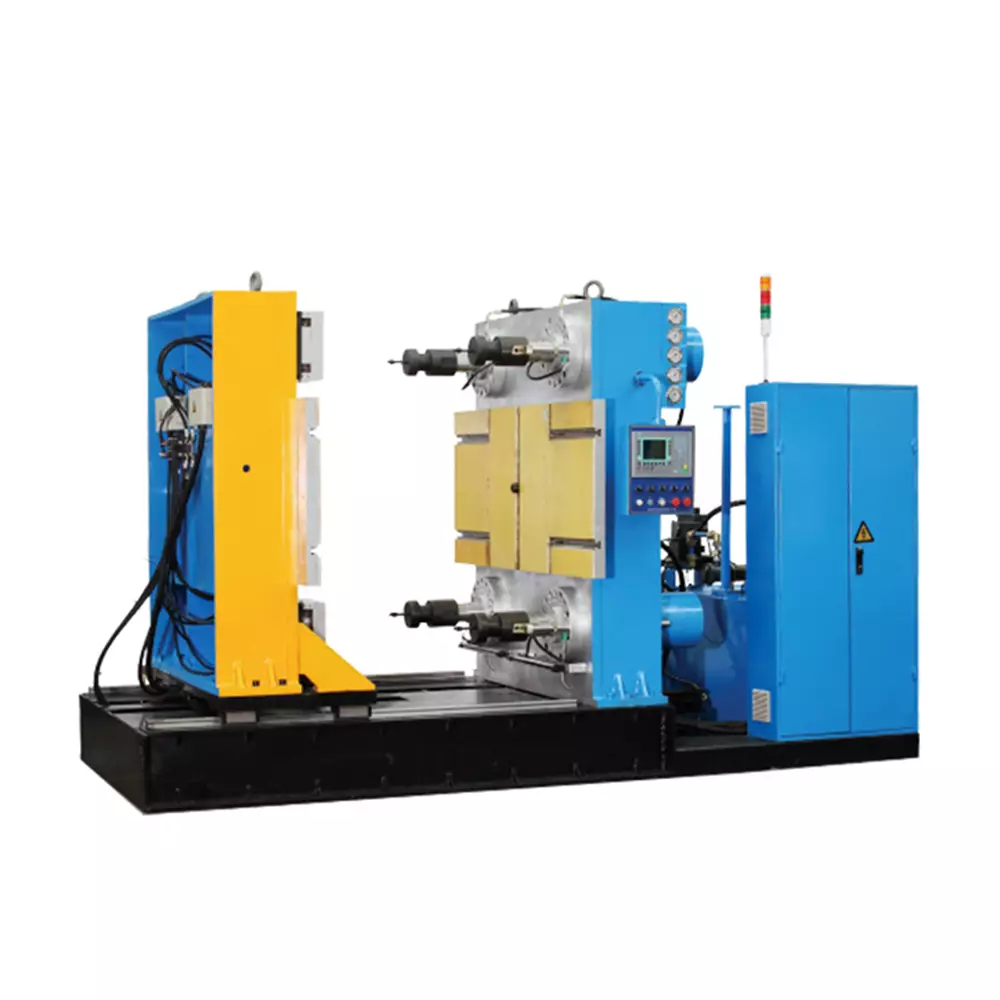
For procurement managers and OEM partners in the power transmission sector, part quality is directly linked to the precision of the production equipment. When sourcing a horizontal rubber injection molding machine, one must evaluate the mechanical and control factors that ensure dimensional stability. As a Hong Kong-invested high-tech enterprise, HWAYI applies its core philosophy of “Cohere Elite, Integrate Creation” to engineer horizontal injection moulding machine systems that deliver high accuracy for critical components. A reliable horizontal rubber injection molding machine must minimize variance to meet the stringent demands of high-voltage applications.
Clamping Unit Stability and Parallelism
The foundation of part quality lies in the clamping unit. HWAYI’s horizontal injection moulding machine features a robust horizontal clamping structure with a patented tiebar-less design. The absence of tie-bars provides unobstructed upper space, but the true precision comes from the clamping platens sliding on guide rails mounted on the machine base. This design ensures high stability and perfect parallelism, preventing micro-misalignments during high-pressure injection. For products like 1000 kV hollow core insulators, this structural rigidity is essential to prevent flashing and ensure uniform wall thickness throughout the part.
Closed-Loop Control and Multi-Phase Injection Logic
Beyond mechanics, process control is a decisive factor. A high-precision horizontal rubber injection molding machine must utilize closed-loop control injection systems. HWAYI integrates this technology to manage multi-phase pressure and speed settings, allowing the machine to adapt to different mold geometries and material flows. This precise control prevents internal stresses and material degradation. Furthermore, offering the horizontal injection moulding machine as part of a turnkey project—including the clamping machine, pump, and metering unit—ensures that all components are calibrated to work in sync, which is vital for producing complex parts like arrestors and cable terminals with absolute consistency.
Conclusion
For distributors and contract manufacturers, the decision to invest in a horizontal rubber injection molding machine should be viewed as a strategic infrastructure upgrade rather than a simple purchase. HWAYI’s approach, rooted in openness and innovation, provides businesses with the technical assurance needed to enter high-barrier markets such as power line components. By leveraging a horizontal injection moulding machine that combines a patented tiebar-less structure with synchronized turnkey systems, companies can drastically shorten their time-to-market for complex LSR insulators. This partnership model empowers businesses to shift focus from troubleshooting equipment to scaling production, thereby securing a dominant position in the global supply chain.