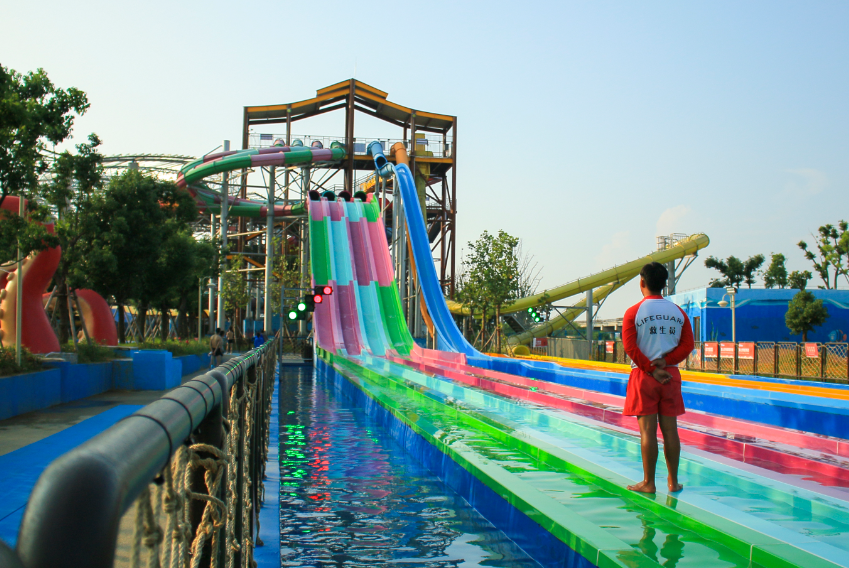
When planning a commercial water park project, selecting the right racing slide requires more than choosing an attractive design. Operators need to evaluate visitor flow, daily capacity, maintenance requirements, and long-term operating efficiency. Among the various attractions available, the mat racer water slide remains a popular choice because it combines competitive interaction with high rider throughput. However, decisions regarding lane count, mat management, and peak hour capacity directly influence the performance of the attraction.
As an experienced water slide supplier, Dalang understands that racing slide procurement involves balancing guest experience with practical operation needs. From multi-lane mat racer water slides to integrated slide combinations featuring an aqualoop water slide, every design element should support smooth operation and reliable visitor circulation.
Understanding the Value of a Mat Racer Water Slide
A mat racer water slide creates a competitive experience by allowing multiple riders to slide side by side toward the finish point. Unlike individual body slides, this attraction encourages social interaction, making it suitable for families, groups, and visitors seeking an exciting challenge.
For water park operators, one of the biggest advantages of a mat racer is its efficient use of space. Multiple lanes allow several guests to participate at the same time, increasing hourly capacity without requiring an extremely large footprint. A well-planned racing slide layout can become an important attraction for managing visitor distribution during busy periods.
When selecting a mat racer water slide, operators should consider the number of lanes, slide length, platform height, and exit area design. A larger number of lanes may increase capacity, but it also requires more space, additional mats, and careful queue management.
Choosing the Right Lane Count for Visitor Demand
Lane count is one of the first factors to evaluate during racing slide procurement. Common configurations include two-lane, four-lane, six-lane, or larger competitive layouts. The ideal choice depends on the expected visitor volume, available installation area, and the role of the attraction within the overall park layout.
For medium-sized parks, a four-lane racing slide can potentially offer a practical balance between excitement and operational considerations. It creates a competitive atmosphere while keeping equipment investment and maintenance requirements manageable. Larger parks with high visitor traffic may consider additional lanes to improve peak period capacity.
However, more lanes do not always mean better performance. Operators should analyze queue length, dispatch speed, and rider preparation time. If the starting platform becomes crowded or the exit area cannot process riders efficiently, the additional lanes may not deliver the expected increase in throughput.
A professional water park equipment manufacturer will evaluate these factors during the design stage. Dalang provides different water slide solutions that can be adapted according to project requirements, including various slide combinations and attraction layouts.
Managing Mat Logistics and Daily Operations
Although the sliding experience is the main attraction, mat management is an important operational consideration. Racing slides require a sufficient supply of mats to ensure continuous operation during peak hours.
Operators should consider several questions before purchasing:
How many mats are required for normal operation?
Where will used mats be collected after each ride?
How will staff transport mats back to the starting platform?
Is there enough storage space for replacement mats?
An efficient mat circulation system can help reduce visitor waiting times and improve staff work efficiency. Poor mat logistics can create unnecessary delays, especially during weekends, holidays, and seasonal peaks.
The design of the slide tower and queue area should also support easy mat handling. Storage zones, transportation paths, and staff access points should be planned together with the slide installation rather than added later.
For international projects, transportation requirements are another important factor. Equipment packaging, shipping volume, and installation procedures can influence project timelines and overall costs. Dalang’s water slide products are designed with professional packaging solutions to support global delivery and installation needs.
Calculating Peak Capacity Before Procurement
Peak capacity planning helps operators select equipment that matches actual visitor demand. Theoretical capacity depends on factors such as lane number, rider dispatch intervals, slide length, and loading efficiency.
A racing slide with multiple lanes can handle more riders simultaneously, but the entire system must work together. The platform, queue line, starting system, and landing area all affect the final operating capacity.
For example, increasing the number of lanes may require a larger platform and more staff supervision. Similarly, attractions with higher speeds may require additional safety spacing between riders, which affects dispatch frequency.
Water park owners should review both average daily attendance and peak visitor scenarios. An attraction that performs well during normal operation may experience bottlenecks during holidays if capacity planning is insufficient.
Integrating Racing Slides into a Complete Water Park Plan
A racing slide should not be viewed as an independent attraction. Its location, surrounding facilities, and relationship with other water park equipment influence overall visitor experience.
A successful layout considers how guests move from entrance areas to attractions, queues, and exit zones. Racing slides are often positioned in visible locations because competitive rides naturally attract attention and encourage group participation.
During procurement, operators should also evaluate material quality, safety standards, installation support, and after-sales service. Working with a reliable water slide supplier helps ensure that the equipment matches both current operational needs and future expansion plans.
Dalang provides complete water park equipment solutions, covering slide design, manufacturing, and project support for different types of water park developments.
Conclusion
Racing slide procurement requires careful evaluation of lane count, mat logistics, and peak capacity rather than focusing only on appearance. A properly designed mat racer water slide can provide strong visitor engagement while maintaining efficient operation.
By analyzing visitor demand, planning equipment flow, and selecting suitable configurations, operators can create a racing attraction that performs consistently throughout the season. Whether integrating a competitive mat racer water slide or combining it with attractions such as an aqualoop water slide, choosing the right water slide supplier is an important step toward building a practical and enjoyable water park environment. Dalang continues to provide customized water park equipment solutions designed around different project goals and operational requirements.