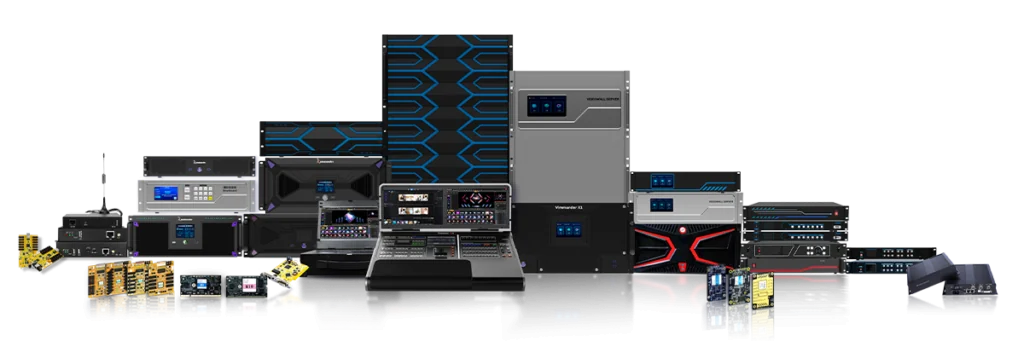
LED displays have become an essential visual solution for many applications, including stage performances, commercial advertising, corporate spaces, broadcast studios, and control rooms. As display projects become larger and more complex, many customers ask an important question: is an LED video wall controller necessary for their project?
The answer depends on the size, purpose, and technical requirements of the LED display system. While some simple screens may operate with basic playback equipment, professional LED installations usually require dedicated control hardware to ensure accurate signal processing, stable transmission, and high-quality image performance.
An LED video wall controller plays a key role in connecting video sources with LED panels. It helps manage image processing, screen configuration, and content output, making it an important component for many large-scale visual projects. Kystar develops professional LED display control solutions that help customers achieve reliable and flexible display performance across different applications.
What Does an LED Video Wall Controller Do?
An LED video wall controller is designed to manage the communication between video signals and LED display systems. It receives content from different sources, processes the signals, and sends optimized data to the LED screen so that images can be displayed correctly.
Unlike a standard media player that only plays video files, an LED video wall controller focuses on controlling how content appears on the screen. It can handle tasks such as signal switching, image scaling, screen configuration, and content adjustment.
For example, a large LED wall used in a conference center may need to display presentations, videos, and live camera feeds. A controller allows these different sources to be managed efficiently and ensures that the final image matches the screen size and resolution.
In professional LED applications, Kystar’s video controllers integrate functions such as video processing and LED sending capabilities, helping simplify system design while supporting different display requirements.
When Is an LED Video Wall Controller Necessary?
Large LED Displays Require More Control
For small LED screens with simple content playback, a basic solution may sometimes be enough. However, as the screen size increases, the technical requirements become more demanding.
Large LED walls often involve higher resolutions, longer signal transmission distances, and more complicated configurations. Without a dedicated controller, it can be difficult to maintain stable image quality and accurate content output.
For example, a large outdoor advertising screen, stadium display, or stage LED background may need precise control over brightness, resolution, and signal distribution. An LED video wall controller provides the necessary management functions to keep the display operating smoothly.
Multiple Video Sources Need Professional Management
Many modern LED projects do not rely on a single video source. Events, broadcast environments, and commercial installations often require multiple inputs, including cameras, computers, media servers, and other devices.
An LED video wall controller allows operators to switch between different sources and organize content according to the display requirements. This is especially useful for live events where quick changes and reliable operation are critical.
For example, during a concert, the LED wall may need to show live camera footage, background animations, and promotional content at different moments. A professional controller helps coordinate these visual elements without interrupting the performance.
How Does an LED Video Wall Controller Improve Display Quality?
Better Image Processing and Screen Adaptation
One of the main advantages of using an LED video wall controller is improved image processing. LED displays often have unique resolutions and physical layouts, meaning incoming video signals may need adjustment before they can be displayed properly.
A controller can optimize the signal by adapting the content to the LED screen’s resolution and structure. This helps reduce image distortion, improve clarity, and maintain consistent visual quality.
For creative LED installations, this function is particularly important because many projects use irregular screen shapes, large display areas, or customized layouts.
More Reliable Operation for Professional Projects
Reliability is another major reason why professional LED projects require dedicated control equipment. A display failure or unstable signal during a live event can affect the entire audience experience.
An LED video wall controller helps create a more stable connection between content sources and LED modules. Features such as signal management, synchronization, and flexible configuration allow operators to maintain consistent performance.
Kystar’s LED controller solutions support applications such as rental displays, fixed LED video walls, command centers, exhibition halls, conference rooms, and creative visual projects.
Do Small LED Projects Always Need a Controller?
Not every LED project requires a separate high-end controller. The decision depends on the complexity of the display.
For simple applications, such as a small indoor advertising screen with fixed content, an integrated control solution may be more suitable. These systems combine processing and sending functions, reducing equipment requirements and simplifying installation.
However, even smaller projects can benefit from a controller when users need better image adjustment, multiple inputs, or future expansion possibilities.
Integrated controllers are becoming increasingly popular because they provide a balance between simplicity and professional performance. Kystar’s integrated video controller products combine processing functions with LED control capabilities, offering flexible options for different project sizes.
Choosing the Right LED Video Wall Controller for Your Project
Selecting the correct controller requires understanding the specific needs of the LED display system. Screen size, resolution, content type, and operating environment all influence the right choice.
Projects with complex visual requirements, such as concerts, broadcast studios, and immersive experiences, usually need advanced processing capabilities. These environments often involve multiple sources, high-resolution content, and real-time adjustments.
For commercial displays or standard LED installations, a more compact controller may provide sufficient performance while keeping the system simple.
The goal is not always to choose the most powerful device, but to select equipment that matches the actual application. A properly configured control system improves efficiency, reduces operational difficulties, and supports long-term display reliability.
Is an LED Video Wall Controller Worth Using?
An LED video wall controller is an important part of many professional LED display projects because it provides signal management, image processing, and reliable screen control. While simple displays may operate without advanced equipment, larger and more demanding applications usually benefit greatly from dedicated control solutions.
For projects involving multiple sources, large screen sizes, creative layouts, or high-quality visual requirements, a controller is often necessary to achieve the expected performance.
As LED technology continues to develop, professional control systems will remain essential for delivering smooth, accurate, and impressive visual experiences. With flexible LED control solutions, Kystar helps customers create stable and efficient display systems for entertainment, commercial, and professional applications.