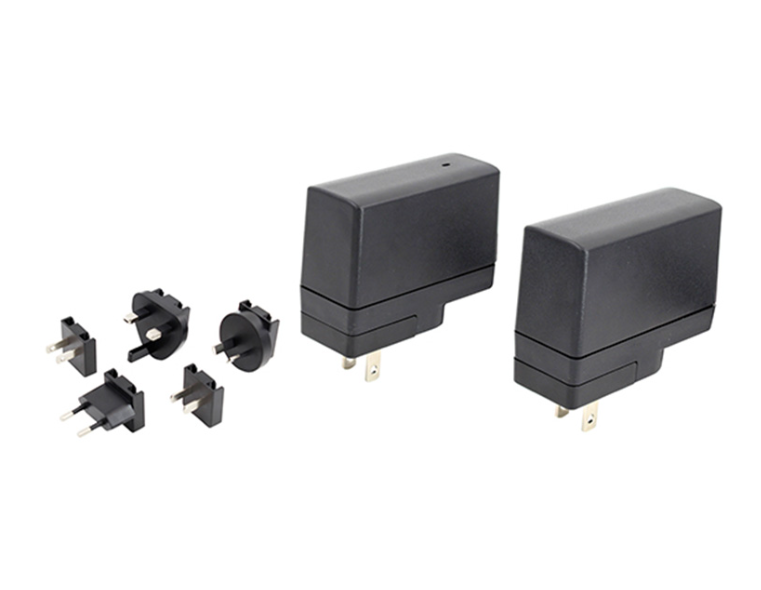
A universal AC charger adapter may look similar to standard external power products, but its suitability for medical applications depends on design details rather than appearance. Factors such as isolation protection, leakage current control, output stability, and application environment determine whether an adapter can meet medical equipment requirements.
A universal AC charger adapter may support certain medical applications when it is designed with suitable protection features and meets relevant requirements. For equipment manufacturers, choosing a reliable power supply for medical industry requires evaluating electrical safety, isolation, and application conditions.
Understanding Whether a Universal AC Charger Adapter Fits Medical Applications
Medical equipment usually has stricter requirements than general electronic devices. The power source needs to provide stable output while reducing risks caused by electrical interference or abnormal conditions. Factors such as insulation protection, leakage current, and electromagnetic compatibility should be considered during product selection.
A universal AC charger adapter is not automatically suitable for medical equipment. Its application depends on whether the design meets medical safety expectations. Engineers need to review certification requirements, protection functions, and verification results before integrating the adapter into a medical system.
For manufacturers developing monitoring devices, portable medical equipment, or related systems, the power module is an important part of the overall design. A suitable power supply for medical industry should match both the electrical specifications and the safety requirements of the final equipment.
The required output voltage, current capacity, isolation level, and operating environment should also be checked against the equipment design. These details help engineers determine whether the adapter can operate reliably under the expected load and working conditions.
Medical devices such as patient monitors, diagnostic equipment, and portable instruments may have different power demands, so adapter selection should consider the complete system design and usage conditions.
Key Differences Between General Adapters and Medical Power Solutions
General adapters are often designed for daily electronic products, while medical applications require additional protection considerations. Isolation design is one important factor because it helps separate input and output circuits and reduces potential electrical risks.
Protection functions are also important during equipment operation. Features such as short circuit protection, overvoltage protection, and overload protection can help maintain stable performance when unexpected situations occur.
For medical-related applications, external power solutions usually need to combine compact design with electrical protection. Manufacturers should evaluate whether the adapter structure, output capability, and safety features match the requirements of the target equipment.
The UES12LCP-SPA/UES12LCP-SPC series supports 4V to 24V output with power up to 12W. It also includes constant current and conversion functions, allowing the product to be applied in systems that integrate battery charging functions.
Safety Evaluation of Power Supply for Medical Industry
When selecting a power supply for medical industry, manufacturers usually pay attention to safety certifications and electrical performance. The UES12LCP-SPA/UES12LCP-SPC series includes 2 MOPP isolation protection and complies with medical device BF level requirements.
The product design also considers leakage current control, with leakage current ≤10. Energy efficiency performance meets DOE efficiency level six and CoC V5 Tier 2 (2016) requirements. These specifications help equipment developers evaluate whether the power solution matches their product standards.
Working environment is another factor that may influence selection. The series supports a working altitude of 5000 meters, providing flexibility for different equipment application conditions.
For medical equipment companies, EMC performance is also an important evaluation point. Electromagnetic interference may affect connected systems, so verification during the development stage is necessary.
How to Evaluate a Universal AC Charger Adapter Before Medical Integration
Before integrating an external adapter into medical equipment, manufacturers need to evaluate several technical factors beyond output specifications. Electrical safety, EMC performance, mechanical compatibility, and environmental conditions should all be considered during the product development stage.
EMC verification is especially important because electromagnetic interference may affect the operation of sensitive medical devices. Testing helps engineers identify potential compatibility issues and make adjustments before moving to final production.
In addition, manufacturers should review the adapter’s operating temperature range, protection functions, connector design, and expected service conditions. These details help ensure the selected power solution can work reliably with the complete medical system.
Selecting a Suitable External Power Solution
The answer to whether a universal AC charger adapter can be used for medical equipment depends on its technical design and compliance level. A suitable solution needs to combine stable power conversion, safety protection, and verification support.
For companies developing medical devices, hoosing a qualified power supply supplier for medical applications involves more than checking output specifications. Long-term supply capability, customization support, and quality management processes are also important considerations.
UE Electronic provides external power solutions for medical and industrial applications, supporting manufacturers with reliable adapter designs for professional equipment.
A well-designed power solution helps equipment manufacturers build stable products while meeting project requirements. Careful evaluation of technical specifications and verification processes can help companies select a suitable power adapter for their equipment development.