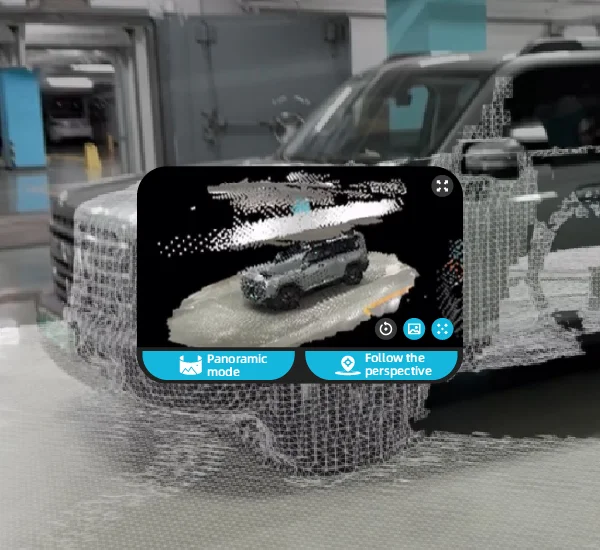
3D reconstruction supports accident investigations by converting scene data into digital models that help investigators analyze spatial relationships, review collision conditions, and present evidence more clearly. Traditional methods, including photographs, measurements, and written reports, may not fully represent the spatial relationships, environmental conditions, or movement patterns involved in a collision. As legal and insurance processes demand stronger evidence, 3D accident reconstruction is becoming an important approach for creating accurate, visual, and well-organized case documentation.
By combining image processing, artificial intelligence, and three-dimensional modeling technologies, modern reconstruction solutions help investigators transform real-world scenes into digital environments. Icecypress Technology, a spatial intelligence AI company specializing in 3D and AI technologies, develops solutions that simplify complex reconstruction workflows and make advanced spatial analysis more accessible for professional and frontline users.
The Growing Role of 3D Accident Reconstruction in Modern Investigations
Accident reconstruction plays a critical role in determining what happened before, during, and after an incident. Investigators need reliable evidence to analyze vehicle positions, impact points, road conditions, and surrounding environments. However, traditional investigation approaches can involve time-consuming measurements and manual documentation processes.
A digital approach based on 3D accident reconstruction provides a more comprehensive view of accident scenes. By converting collected visual data into realistic three-dimensional models, investigators can examine details from different angles and preserve the original scene digitally.
This capability is especially valuable when cases move from investigation stages into legal proceedings. A clear 3D reconstruction can help communicate technical findings to judges, lawyers, insurance professionals, and other stakeholders who may not have engineering expertise.
Simplifying Data Collection with Flexible Reconstruction Technology
One of the biggest challenges in accident reconstruction is collecting accurate scene information quickly. Many traditional workflows require specialized equipment and trained operators, which can limit efficiency when investigators must respond immediately after an incident.
Icecypress Technology’s Rusa scene reconstruction software addresses these challenges by simplifying the entire reconstruction process. The platform follows a three-step workflow: collection, processing, and output. This closed-loop structure reduces unnecessary procedures and allows ordinary users to complete reconstruction tasks without requiring advanced professional skills.
The flexible capture capability allows users to collect footage through commonly available devices rather than relying only on dedicated scanning equipment. This makes digital scene reconstruction easier to integrate into existing investigation workflows.
Accident Investigation Software Enhances Field Efficiency
Modern accident investigation software is designed to improve the speed and accuracy of evidence management. Instead of spending extensive time organizing separate photos, measurements, and notes, investigators can use integrated platforms to process visual information and generate structured digital scenes.
Rusa supports adaptive frame extraction, allowing the system to match different shooting speeds and collection conditions. Whether the footage is captured during a fast response or a detailed inspection, the software can adjust the processing approach to maintain efficient reconstruction.
Another important advantage is all-weather operation. Real-world accident scenes are rarely captured under perfect conditions. Lighting changes, environmental factors, and limited access can affect data collection. A flexible reconstruction solution helps investigators adapt workflows across different scenarios and collection conditions.
From Scene Capture to Digital Evidence Presentation
A complete reconstruction workflow should not only create models but also support effective review and communication. After collecting scene data, processing technology converts captured information into a three-dimensional environment that can be analyzed and presented.
Rusa enables rapid preview generation, allowing users to review captured information before leaving the scene. This function helps reduce repeated visits and improves operational efficiency during time-sensitive investigations.
Once a detailed model is generated, investigators can use digital visualization to examine accident conditions from multiple perspectives. This provides a stronger foundation for analysis compared with traditional two-dimensional documentation.
For courtroom applications, visual evidence can make complex accident scenarios easier to understand. A properly created reconstruction can demonstrate vehicle trajectories, environmental factors, and spatial relationships in a way that written descriptions alone cannot achieve.
Making Professional Reconstruction More Accessible
Historically, advanced reconstruction technologies were often associated with specialized teams, expensive equipment, and complicated procedures. However, the development of AI-powered solutions is changing this situation by lowering technical barriers.
Icecypress Technology focuses on combining 3D technology, AI algorithms, and spatial intelligence to create practical solutions for real-world applications. Its reconstruction technology allows users to complete the process from capture to output with fewer technical requirements.
This accessibility enables more organizations, including law enforcement agencies, insurance companies, engineering teams, and legal service providers, to adopt digital reconstruction methods. By improving efficiency while maintaining accuracy, these technologies support better decision-making throughout the investigation process.
Building More Reliable Evidence Through Digital Innovation
As accident investigations become increasingly data-driven, digital reconstruction will continue to influence how evidence is collected, analyzed, and presented. The combination of AI, 3D modeling, and intelligent software provides a pathway toward faster investigations and clearer communication.
Icecypress Technology’s Rusa scene reconstruction software demonstrates how modern spatial intelligence can simplify accident analysis. Through flexible capture, efficient processing, and accessible output, the solution helps transform complex accident scenes into understandable digital environments.
The future of accident investigation will depend on technologies that make evidence more accurate, transparent, and defensible. With advanced 3D accident reconstruction and intelligent accident investigation software, organizations can improve investigation workflows while creating stronger foundations for professional analysis and legal review.