As of 2026, the industrial landscape has reached a pivotal transformation point. The global robotics market is projected to surpass $88 billion this year, fueled by a perfect storm of structural labor shortages, government-backed reshoring initiatives, and the rapid maturation of “Physical AI.” For industrial robotics companies, the focus has shifted from mere mechanical repetition to creating high-IQ systems that can adapt to dynamic environments.
Navigating this growth requires a keen understanding of regional dynamics. While automation is a global trend, the drivers in the “Automated East” differ significantly from those in the “Reshoring West.” Understanding these top regions is essential for any enterprise looking to integrate an industrial cobot into their long-term strategy.
1. Asia-Pacific: The Unrivaled Epicenter
Asia-Pacific remains the world’s largest market, accounting for approximately 48% of global industrial robot installations. This region is no longer just a manufacturing hub; it is the primary innovator in high-density automation.
China: Under the 14th Five-Year Plan, China has solidified its position as the world’s biggest adopter, with an operational stock of over 1.8 million robots. The focus here is on precision electronics and battery manufacturing, where robots are tasked with cell stacking and precision gluing.
Japan & South Korea: These nations are pivoting toward “Society 5.0,” blending AI and IoT with next-generation automation. Japan, in particular, has seen a surge in demand for localized service and assembly, leading to the establishment of dedicated on-site facilities to support the automotive sector.
India: Emerging as a “rising star,” India’s growth is fueled by the expansion of its electronics and pharmaceutical sectors, with a projected CAGR that is among the highest in the world through 2030.
2. North America: The Reshoring Revolution
In North America, the growth of industrial robotics companies is being driven by a strategic imperative to “bring manufacturing home.” The U.S. CHIPS and Science Act has funneled billions into semiconductor clean-room automation, creating a massive spike in demand for high-precision robotic arms.
The trend here is “Agile Automation.” Factories are increasingly rotating an industrial cobot across different assembly cells within a single shift, cutting changeover times from weeks to hours. This flexibility allows North American manufacturers to accept smaller, high-margin orders while neutralizing the domestic wage premium through efficiency.
3. Europe: Safety, Sustainability, and Precision
Europe continues to lead in the adoption of collaborative systems, particularly in Germany, France, and Italy. The European outlook is defined by:
Worker Ergonomics: Using robots to handle repetitive, high-strain tasks to support an aging workforce.
Green Manufacturing: A strong push for energy-efficient, low-carbon robots that align with strict ESG (Environmental, Social, and Governance) standards.
The Nordic Model: A focus on lightweight, highly flexible solutions for the furniture and specialized equipment industries.
4. The Emerging Middle East: Technology Diversification
A surprising frontrunner for the fastest-growing market is the Middle East. Sovereign wealth funds in countries like the UAE and Saudi Arabia are aggressively pursuing technology-driven diversification. They are treating robots not just as capital goods, but as “strategic infrastructure” for new smart cities and logistics hubs, leading to an expected expansion rate of over 21% between now and 2031.
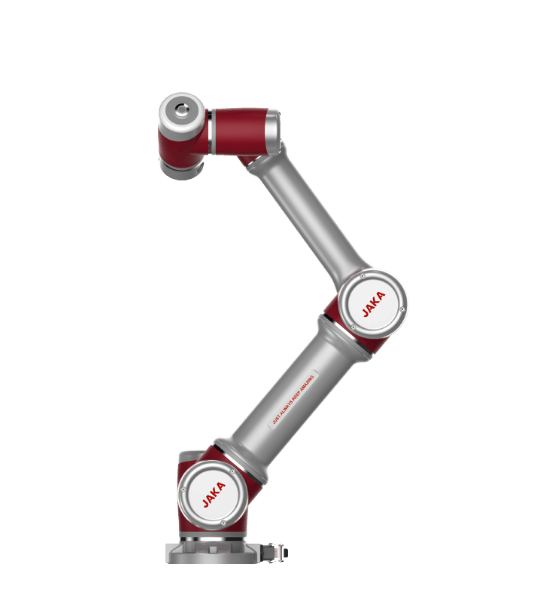
The Pro-Grade Solution for Global Markets: JAKA Pro Series
To meet the rigorous demands of these diverse global regions—from the humid electronics plants of Southeast Asia to the high-precision fabs of the United States—hardware must be more than just “collaborative.” It must be industrial-grade. This is where the JAKA Pro series sets the standard for industrial robotics companies.
While standard cobots excel in clean environments, the JAKA Pro series is specifically designed for harsh, high-intensity working conditions. It bridges the gap between the flexibility of a cobot and the durability of a traditional industrial robot.
Why the JAKA Pro Series Leads the Market:
Rugged Protection: Featuring an IP68 rating, the Pro series is completely dust-tight and can withstand high-pressure water jets or immersion. This makes it ideal for the metal manufacturing and chemical sectors common in emerging markets.
High-Intensity Performance: Engineered for 24/7 operation with a Mean Time Between Failure (MTBF) , ensuring the reliability required for the high-volume lines of the APAC region.
Versatile Payload Options: With models ranging from 5 kg to 16 kg, the Pro series can handle everything from delicate electronics testing to heavy-duty automotive palletizing.
Global Compatibility: Supporting a vast range of communication protocols (Profinet, Ethernet/IP, Modbus), the Pro series integrates seamlessly into the “Digital Twin” ecosystems favored by North American and European factories.
With tens of thousands of units deployed across nearly 100 countries, JAKA provides the localized support and technical expertise needed to navigate the complexities of global expansion. Whether you are automating a factory in Nagoya or a clean room in Texas, the JAKA Pro series offers the durability and intelligence required to thrive in the 2026 robotics reckoning.