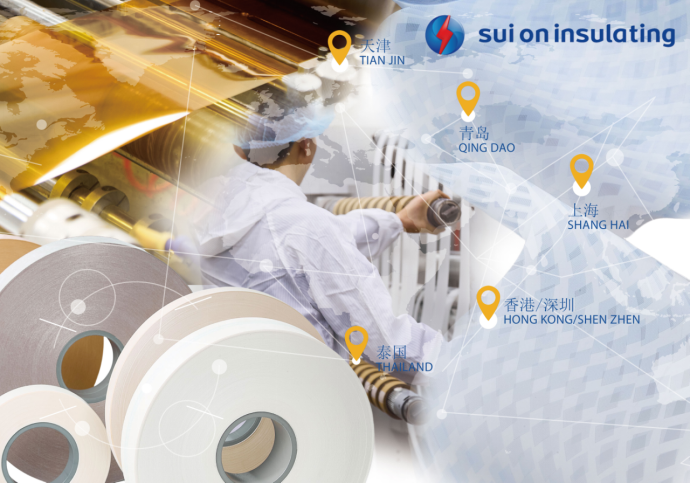
In many industrial insulation scenarios, the comparison between Nomex® insulation and polyester-based films often arises when engineers evaluate long-term reliability and application fit. Polyester films such as Mylar® are widely used due to their stable electrical performance and cost-efficiency, while aramid-based materials offer a different balance of thermal and mechanical properties. This article outlines how these two material types differ in structure, durability, and application suitability.
Material Structure and Thermal Performance
When comparing Nomex® electrical insulation paper with polyester films, the most notable distinction lies in thermal endurance and aging behavior. Aramid fiber-based paper, such as Nomex®, is designed for high-temperature environments and maintains structural integrity over extended periods. Polyester films, including Mylar®, typically perform well in moderate temperature ranges and offer good dimensional stability. However, under continuous thermal stress, aramid materials tend to retain their mechanical strength and insulation properties more consistently, making them suitable for demanding electrical systems.
Mechanical Strength and Application Flexibility
Polyester films are known for their uniform thickness and smooth surface, which supports automated processing and lamination. At the same time, Nomex® insulation provides higher resistance to tearing and mechanical fatigue, which is beneficial in applications involving vibration or long service cycles. Some manufacturers, including Sui On Insulating, develop composite solutions that combine aramid paper with polyester layers, allowing engineers to balance flexibility, strength, and insulation performance based on specific equipment requirements.
Industry Applications and Product Integration
In sectors such as motors, transformers, and data centers, both material types are widely applied depending on design priorities. Polyester films are commonly used for slot liners and phase insulation where cost and consistency are key considerations. Meanwhile, Nomex® electrical insulation paper is often selected for high-temperature insulation systems. Sui On Insulating offers a range of aramid-based insulation products, including flexible papers and composite materials, which are developed to support electrical insulation across different industrial environments while maintaining compatibility with standard processing methods.
Conclusion
The choice between polyester films and Nomex® insulation depends on the operating environment, thermal requirements, and mechanical demands of the application. Polyester materials provide stable and efficient performance for general use, while Nomex® electrical insulation paper supports higher temperature endurance and long-term reliability. By offering both standalone and composite material options, Sui On Insulating supports engineers in selecting insulation solutions that align with real-world operating conditions.