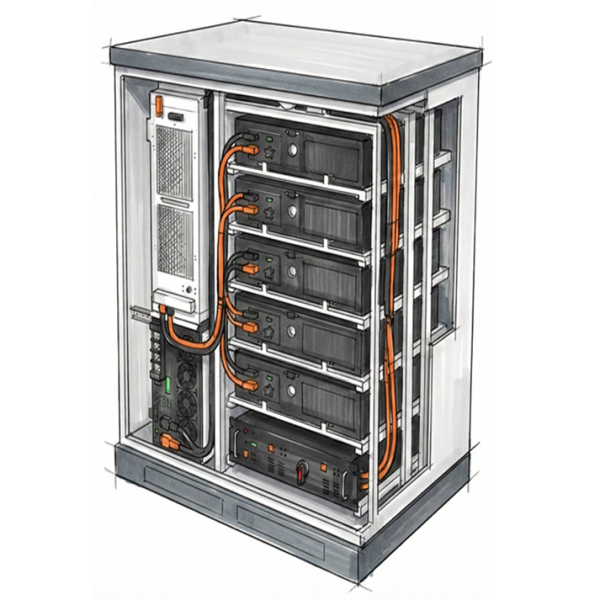
As energy demands continue to rise, commercial and industrial facilities are looking for more flexible ways to manage electricity costs, improve energy reliability, and integrate renewable power. Traditional energy systems often rely heavily on grid electricity, making businesses more exposed to price changes, peak demand charges, and power supply uncertainties.
The strength of a hybrid approach lies in its integration of solar, storage, and grid power—offering a more balanced strategy for energy management. With this storage solution, facilities can dynamically select among power sources to match operational demands, all while improving overall energy efficiency.
With experience in industrial energy management applications, Enjoypowers focuses on developing solutions that support efficient integration between renewable energy resources, battery systems, and electrical grids. Hybrid configurations allow businesses to better control energy flows and create more adaptable power infrastructures.
How Hybrid Energy Storage Solutions Combine Multiple Power Sources
A hybrid energy storage system connects solar photovoltaic generation, battery storage units, and grid power into one coordinated energy network. Each component plays a specific role in maintaining stable and efficient energy operation.
Solar power provides renewable electricity during periods of sufficient sunlight. Instead of sending all generated power directly to the grid or consuming it immediately, excess solar energy can be stored in batteries for later use. This improves renewable energy utilization and reduces dependence on external electricity sources.
Battery systems act as flexible energy buffers. They can store surplus electricity when energy production is high and release power when demand increases or renewable generation decreases. This capability helps facilities maintain more predictable energy consumption patterns.
The grid remains an important part of the hybrid structure by providing additional power support when renewable generation and stored energy cannot fully meet demand. Through intelligent coordination, a hybrid system can balance different energy sources according to real-time conditions.
Energy Storage Solution Design for Commercial and Industrial Applications
For commercial and industrial users, selecting the right energy storage solution requires careful consideration of electricity consumption patterns, operational requirements, and future energy goals.
Many facilities experience variations in electricity demand throughout the day. Manufacturing plants, warehouses, data centers, and commercial buildings may face high consumption periods that increase energy expenses. Battery storage can help shift energy usage by storing electricity during suitable periods and supplying power when demand is higher.
A well-designed system should also consider the interaction between solar generation and facility load requirements. When solar output matches electricity demand, the facility can directly use renewable energy. When generation exceeds consumption, stored energy can preserve this excess power for future needs.
Enjoypowers provides commercial and industrial energy storage approaches designed to support different application environments. By combining battery technology, power conversion equipment, and energy management functions, these systems help businesses achieve more flexible electricity management.
The Importance of BESS Solutions in Hybrid Power Systems
Battery energy storage systems are a core component of modern hybrid energy architectures. Effective BESS solutions allow businesses to manage energy availability more efficiently by controlling when electricity is stored and when it is released.
A battery energy storage system typically includes battery modules, battery management systems, power conversion systems, and monitoring functions. These components work together to ensure safe operation and effective energy conversion.
For industrial facilities, BESS solutions can support multiple operational goals. They may help reduce reliance on grid electricity during high-demand periods, provide backup energy support, and improve the use of renewable generation.
However, battery storage performance depends on factors such as system design, operating conditions, energy management strategies, and application requirements. Businesses need to evaluate their specific energy profiles before selecting an appropriate configuration.
Integrating Solar, Battery, and Grid Power Through Intelligent Control
The effectiveness of a hybrid energy system depends not only on hardware but also on intelligent energy coordination. A smart control system determines how electricity moves between solar panels, batteries, facility loads, and the grid.
During periods of strong solar generation, the system can prioritize renewable energy use. If there is additional available power, the battery can store the excess energy. When solar production decreases, stored battery energy can supplement electricity demand.
Grid interaction is also an important consideration. Hybrid systems can adjust their operating strategy according to electricity prices, demand conditions, and facility priorities. This flexibility allows businesses to optimize energy usage while maintaining reliable operation.
Enjoypowers supports integrated energy management concepts that connect different power resources into coordinated systems. This approach helps industrial users move toward more efficient and intelligent electricity management.
Key Factors When Choosing BESS Solutions for Industrial Needs
Before implementing a hybrid energy storage project, businesses should evaluate several important factors. The first consideration is the facility’s energy consumption profile, including daily load changes and peak electricity periods.
System scalability is another important factor. Energy requirements may change as businesses expand or adopt additional renewable energy sources. A flexible design allows future upgrades without replacing the entire energy infrastructure.
Safety, monitoring capability, and compatibility with existing electrical systems should also be considered. Reliable communication between battery systems, power conversion equipment, and energy management platforms is essential for stable performance.
BESS solutions should be selected based on practical operational goals rather than a single technical feature. A complete evaluation helps ensure that the system can deliver long-term value for commercial and industrial applications.
Building a More Flexible Energy Future with Hybrid Systems
By integrating solar generation, battery storage, and grid power, hybrid energy systems give businesses a practical way to improve energy flexibility. This coordination of multiple electricity sources enables facilities to manage consumption more effectively, boost renewable energy utilization, and enhance power reliability.
A properly designed energy storage solution can support changing energy requirements while providing better control over electricity usage. The combination of renewable generation and intelligent storage creates opportunities for more efficient industrial energy management.
As companies continue to focus on sustainability and operational efficiency, advanced hybrid systems will become an increasingly important part of modern power strategies. With suitable technology integration and professional system planning, Enjoypowers helps customers explore reliable energy solutions that connect renewable energy, battery storage, and grid resources effectively.